Venice is the only city in the world where there are no cars. For visitors traveling to the lagoon city for the first time, getting there can therefore often be a particular challenge. Whether you land at the airport, arrive by car, or take a boat across the Adriatic Sea, getting to your accommodations requires careful planning.
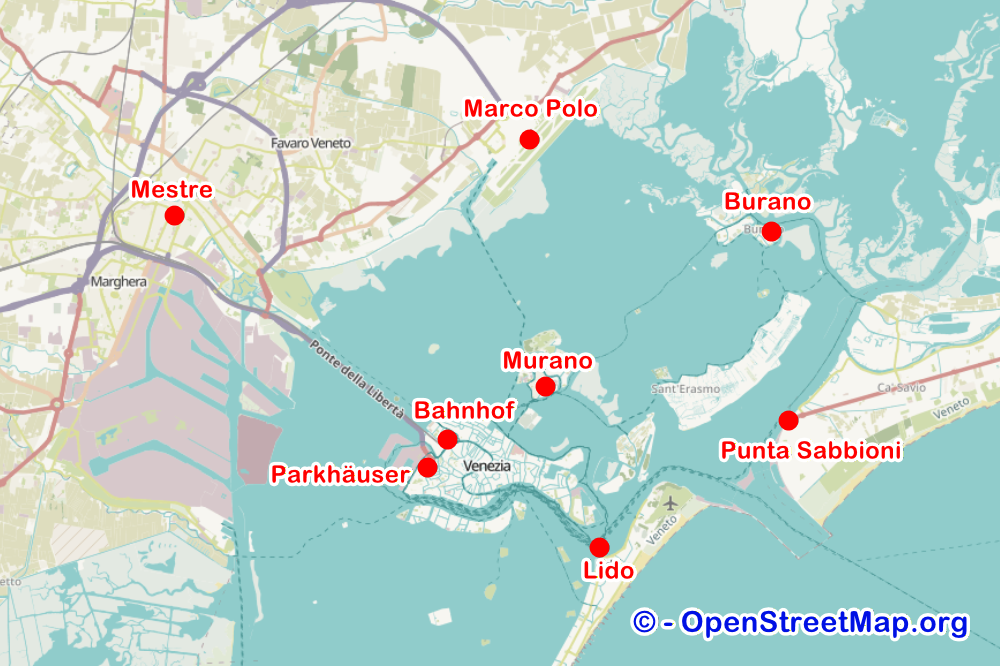
To help you start your stay on a relaxing note, we've compiled the most important information for the various ways to get here on this page. Simply select the category that applies to your travel plans to get detailed information on transfers, parking, and tickets.
Traveling by Air
Venice is an island city in the lagoon of the northern Adriatic Sea. Since space is at a premium here, there is no room for an airport on the island itself. Venice's international airport is named after the famous explorer Marco Polo and is located on the mainland near Tessera.
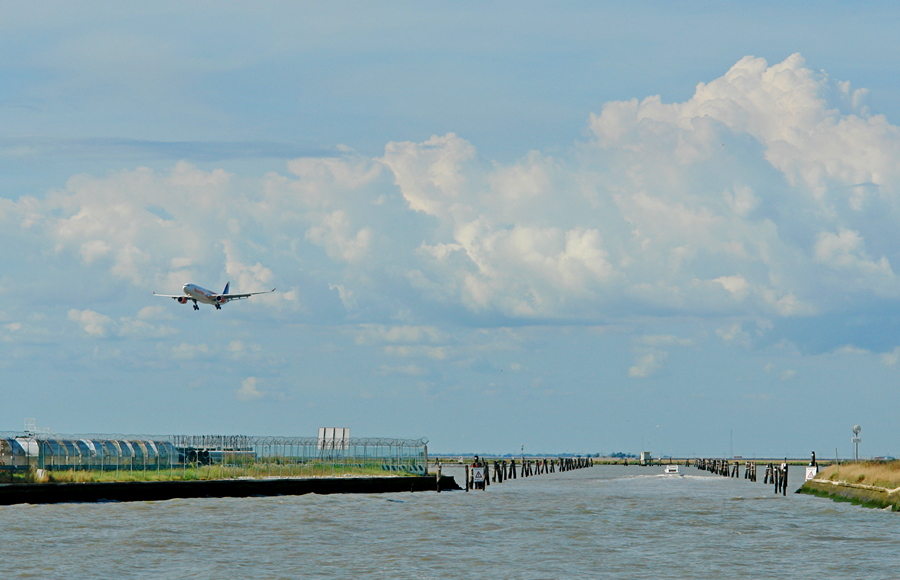
In addition, some airlines fly to the smaller airport Treviso which is located about 35 km inland, north of Venice.
To ensure your stay gets off to a relaxing start, we've put together this guide on how to get from both airports safely and directly to your accommodations in Venice.
Cars & Parking in Venice
Venice is an island city in the lagoon of the northern Adriatic Sea. It is connected by a four-kilometer-long and approximately one-meter-high Bridge of Freedom (Freedom Bridge) connects it to the mainland. All visitors arriving by car must cross this bridge.
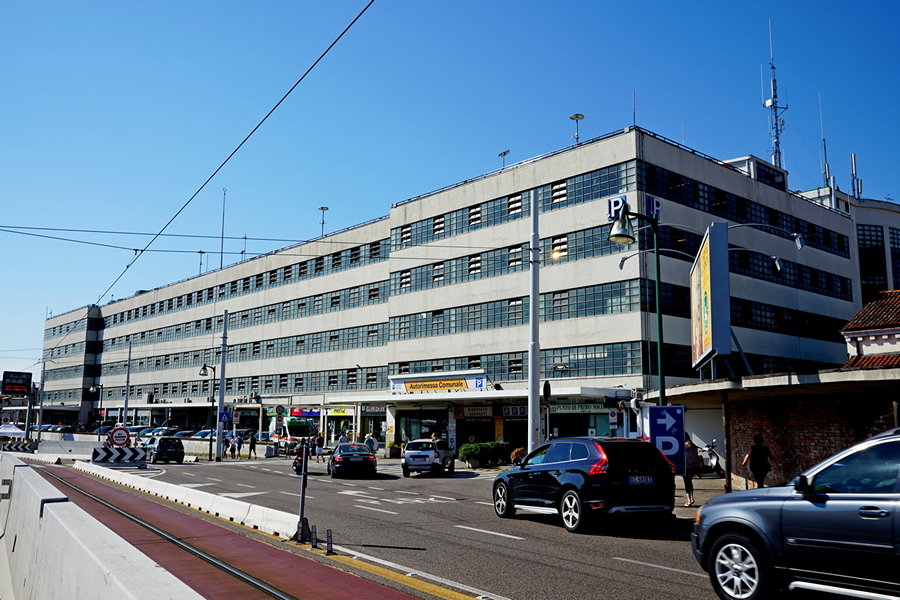
Since the historic Old Town is completely car-free, your drive will end at the far end of this bridge at the latest. There, you’ll have to park your vehicle in one of the parking garages (for example, at Piazzale Roma or on the Tronchetto parking island). From here, you can only continue on to your accommodations by public water bus (vaporetto) or on foot.
Traveling by Train
All trains and buses heading to Venice also cross the Bridge of Freedom. The train station in Venice, Venice Santa Lucia, is what is known as a terminus station: All trains end their run here and later leave the city again in the opposite direction.
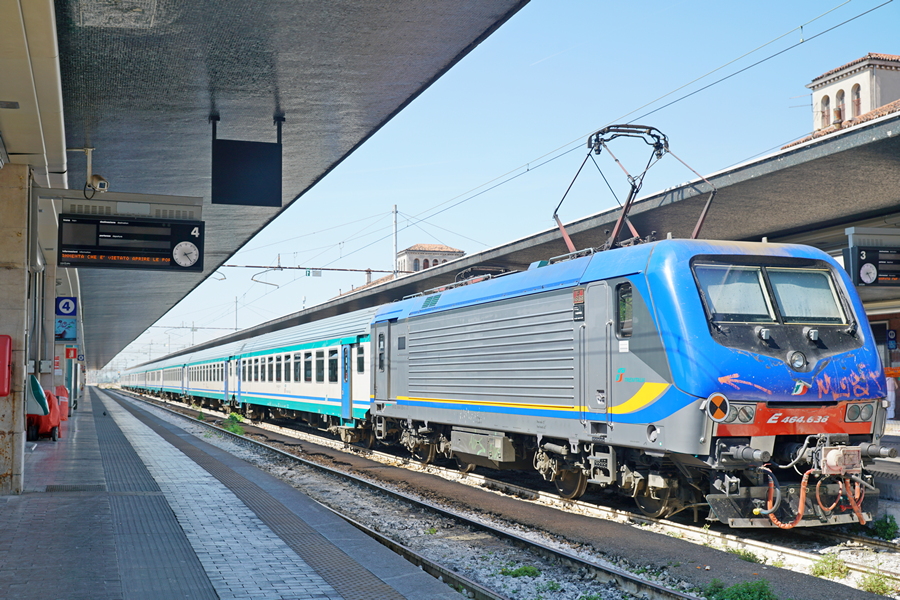
The train station is located in the northern part of the city, right next to the magnificent Grand Canal. The big advantage for you is that, upon arrival, you can easily transfer to a water bus (vaporetto) or a water taxi right in front of the train station building to travel by water to your accommodations.
Traveling to Venice by Tour Bus
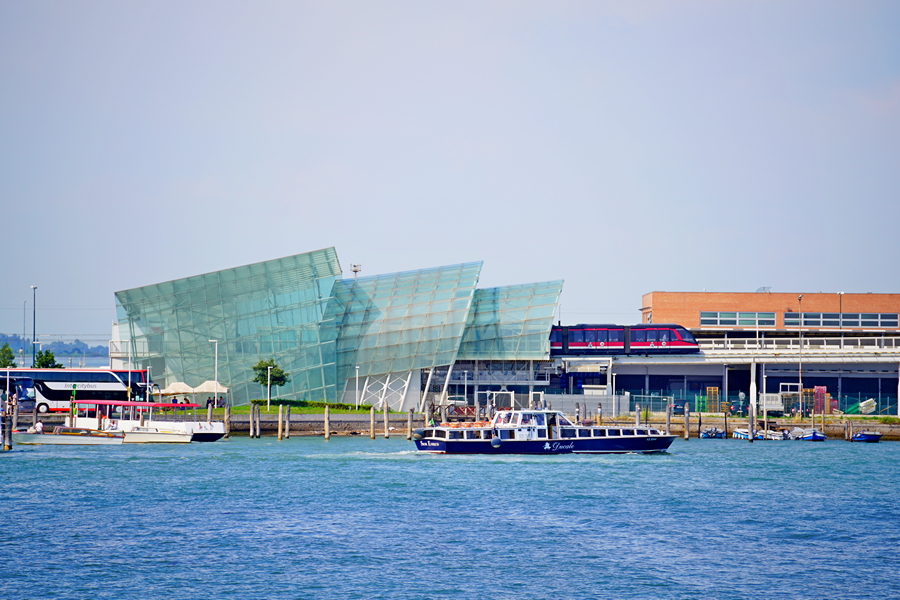
However, Piazzale Roma does not have enough space for the numerous private tour buses that head to Venice, especially during the peak season. For this reason, tour buses from all over Europe are consistently directed to the end of the bridge—Ponte delle Libertà—and to the parking island. Tronchetto redirected.
By boat from the Adriatic Sea / Punta Sabbioni
Official statistics are difficult to compile, but the proportion of day-trippers among Venice’s visitors is enormous. Anyone spending their vacation on the beaches of the northern Adriatic almost always takes advantage of the proximity to the lagoon city for a day trip. After all, everyone wants to see this extraordinary city with all its historical treasures with their own eyes at least once.
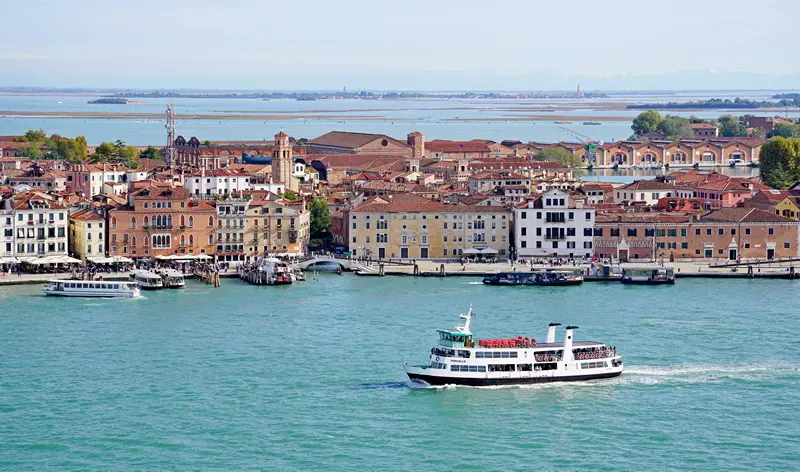
Especially on days when the sky is overcast or rain is on the way, vacationers are drawn away from the beach and toward a trip to Venice. For many guests from the surrounding resort towns, traveling by boat is both the most convenient and the most scenic way to reach the heart of the city directly.
A popular bridgehead for the crossing is the town of Punta Sabbioni at the western tip of the Cavallino Peninsula. There you’ll find plenty of affordable and secure parking spaces. The subsequent ferry ride takes only about 35 minutes and takes you directly to the heart of Venice: St. Mark’s Square.
Local Public Transportation (Vaporetto)
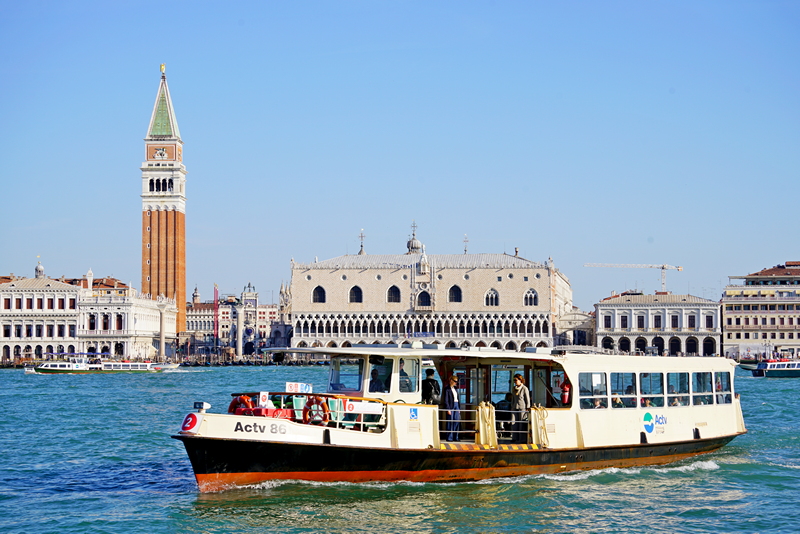
In the historic old town, all public transportation takes place on the water. The water buses in Venice Vaporetto —which literally translates to „little steamer.“.
You can use these boats to get around the entire city. It's also the only way to reach the fascinating neighboring islands in the lagoon:
- Lido (the beach in Venice)
- Murano (known for his glassblowing artistry)
- Burano (the island of colorful houses and lace embroidery)
- Torcello (the cradle of Venetian civilization)
Well Prepared for the City on the Lagoon
As you can see, getting to Venice is a little different than getting to other cities, but with the right preparation, it’s absolutely stress-free. Whether you’re traveling via the Bridge of Freedom Whether you fly in, land at the airport, or arrive by boat from the Adriatic Sea: the moment you see the Grand Canal for the first time will make all your planning worthwhile.
We hope this overview helps you find the best connection for you. Please take a moment to read the details on the respective subpages—this will help you avoid unnecessary wait times and allow you to enjoy your stay in Venice in peace from the very first minute.
An Overview of All Ways to Get to Venice
- Traveling to Venice – How to Get There Stress-Free.
- Traveling by Air
- Cars & Parking in Venice
- Traveling by Train
- Traveling by Coach
- By boat from the Adriatic Sea / Punta Sabbioni
- Local public transportation (vaporetto)