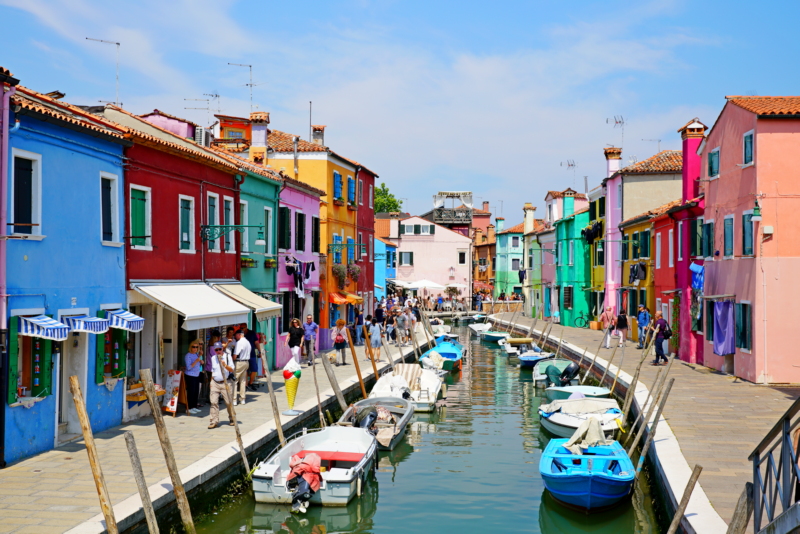
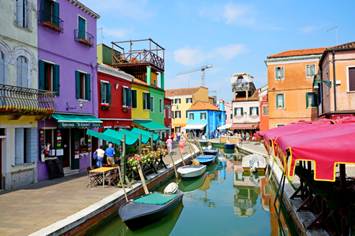
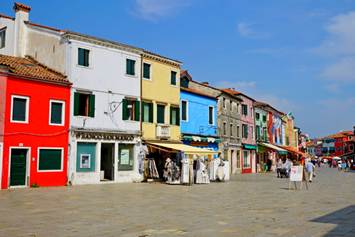
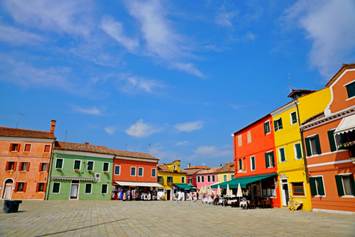
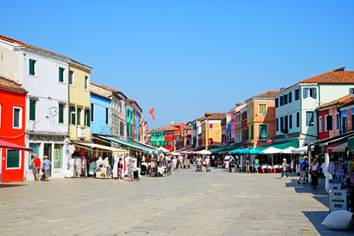
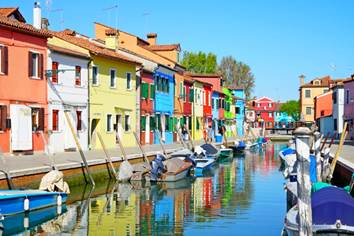
What you’ve already heard about Murano will also strike you here in Burano: The houses are much lower and smaller. And, above all, colorful. Legend has it that the colorful houses on the island of Burano helped fishermen find their way safely back to their home port, even in fog. In the past, many men here made their living by fishing.
You’ll love the peaceful and tranquil atmosphere on Burano. It seems as though ALL the tourists leave the hustle and bustle behind in Venice. About 5,000 people live here. The small fishermen’s cottages give the town a very special atmosphere that invites you to relax. The reflections on the water created by the colorful buildings are also very beautiful.
Getting to Burano
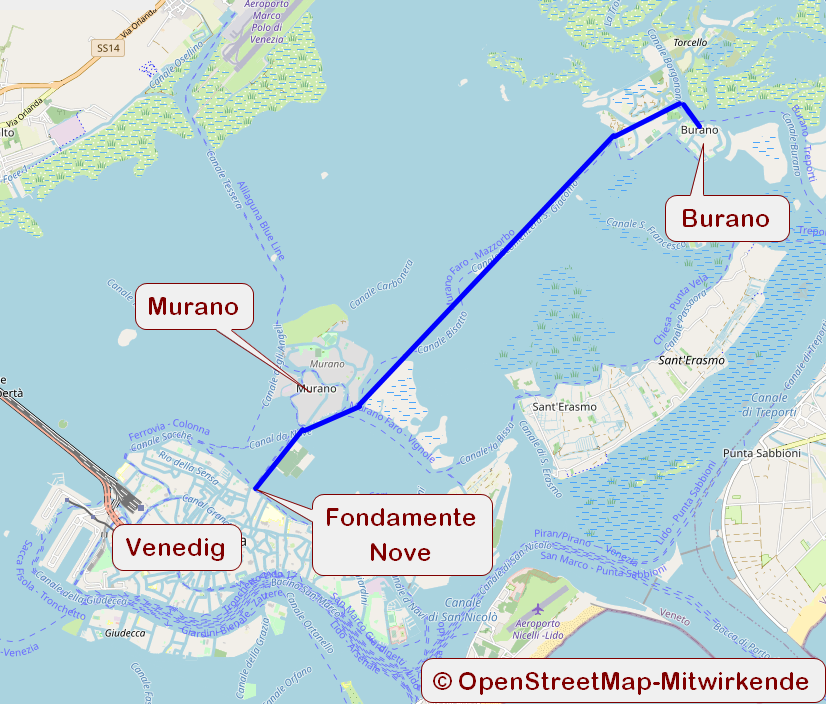
The plan is from https://www.OpenStreetMap.org – © OpenStreetMap contributors
You can reach Burano by vaporetto from the Line 12. The departure stop in Venice is Fondamente Nove. It is located on the northeastern outskirts of the city and is also the stop for Murano and San Michele.
You can also board Line 12 to Burano at the Faro stop in Murano. Line 12 runs every half hour during the day. A one-way fare costs 9.50 euros.
Lace Embroidery
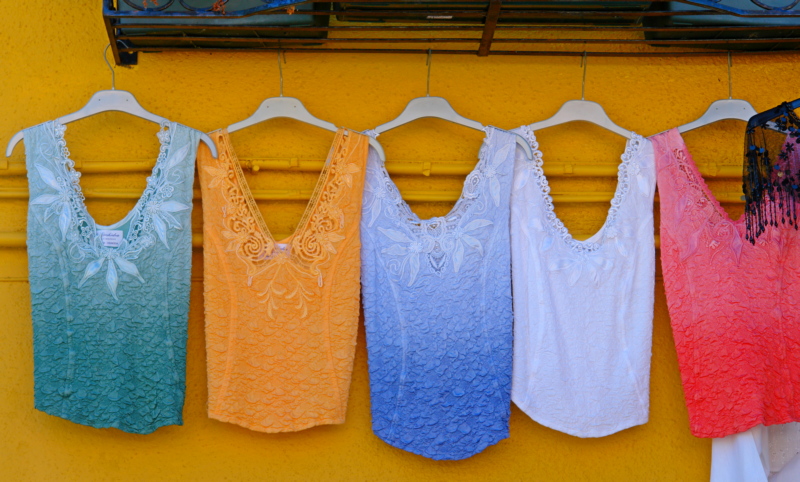
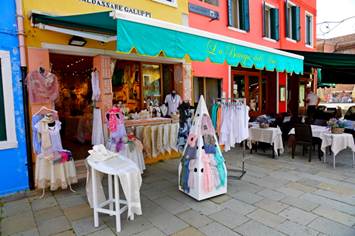
The people of Burano used to make their living from fishing and lace-making. If you're interested, visit the „Museo del Merletto,“ where you can see authentic Burano lace from the „Scuola di Merletti.“.
Since we, as end customers, are no longer willing to pay the price for the luxury of genuine Burano lace, almost all the lace on the market today is cheaply made and sourced from all over the world. However, if you ask, you can see and even buy genuine lace in reputable stores.
The production of ornate lace has a long tradition on the island of Burano. As early as the 16th century, women were already crafting these beautiful items. The lace was created using an elaborate needle-lace technique called reticella. Later, additional techniques were introduced.
Until the end of the 18th century, the sale of lace was an important source of income for the islanders. By the mid-19th century, the art of lace-making was in danger of falling into oblivion.
But then, in 1872, the Scuola di Merletti was founded. At this lace-making school, replicas of old needlework techniques were created. In 1940, these high-quality laces were even exhibited at the Triennale in Milan.
Colorful Burano
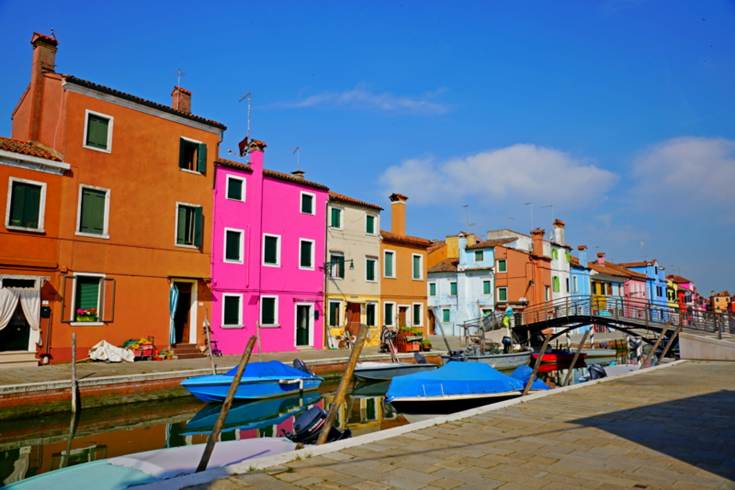
Burano is located in the Venetian Lagoon and consists of four islands. These islands are connected by bridges. Burano is one of the largest islands in the Venetian region.
It's quieter here than in Venice, but you can still go shopping if you'd like. Small shops sell lace and other items. Burano is an attractive destination for a day trip and is easily accessible from Venice.
The various restaurants offer delicious food and drinks. Here, you can enjoy a refreshing meal after a leisurely stroll around the island.
Burano Attractions
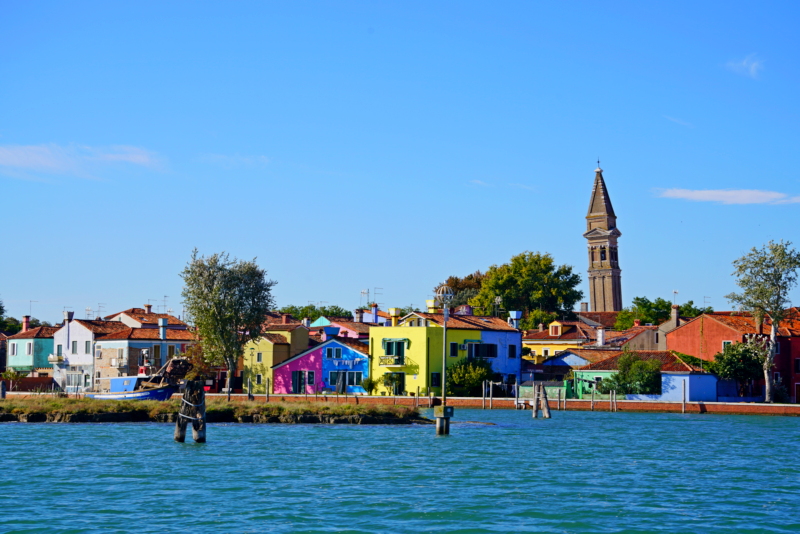
The Church of San Martino is located on Piazza Galuppi. The church features a slate-roofed campanile. A campanile is a bell tower that stands next to a church. You can also visit the Scuola di Merletti on Piazza Galuppi.
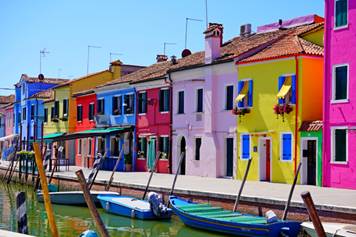
The exquisite lace from the island of Burano is on display there. The colorful fishermen’s houses are another attraction on the island. They are painted in bright, varied colors. These charming little houses are a popular photo subject for many. Professional photographers are also drawn to these fascinating buildings.
Burano on the Map
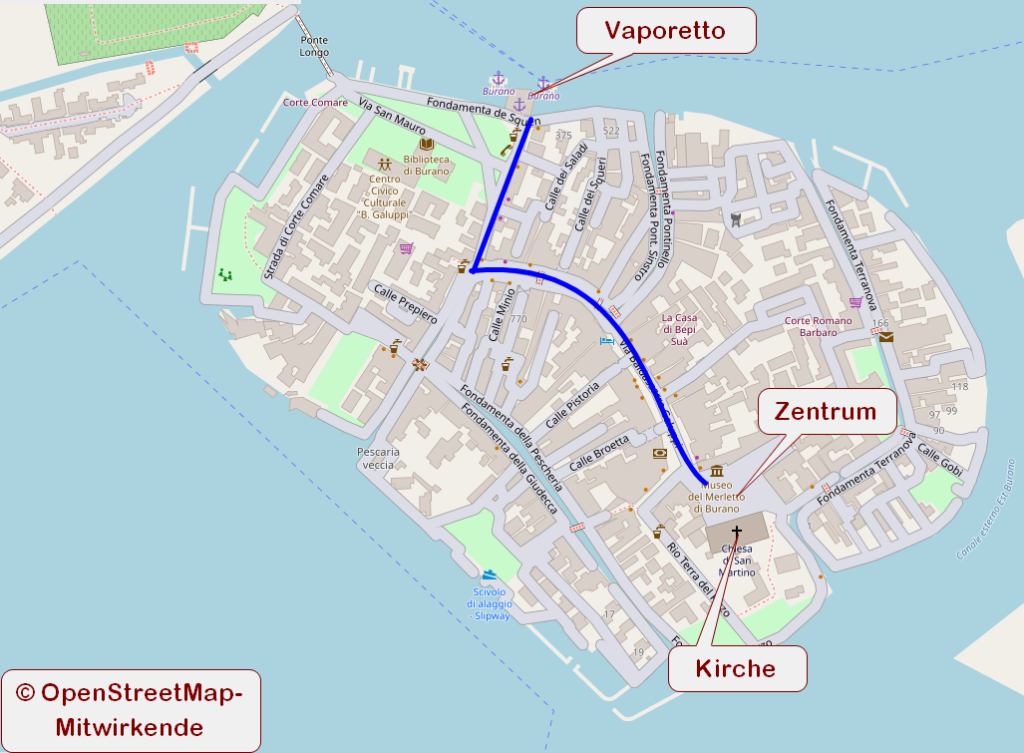
The plan is from https://www.OpenStreetMap.org – © OpenStreetMap contributors
Walk straight ahead from the vaporetto stop onto the island. After about 100 meters, turn right at the first small canal and continue to the center. The church is there, too. You can’t get lost. Burano is very small.
Burano Photo Gallery
The Islands of the Lagoon
Island Overview: Lido, Murano, San Michele, Burano, and Torcello
The Lido of Venice
To the glassblowers in Murano
San Michele Cemetery Island
To the colorful houses in Burano
To the Roots of Venice: Torcello