What is ACTV? Meaning, Functions, and Role in Venice
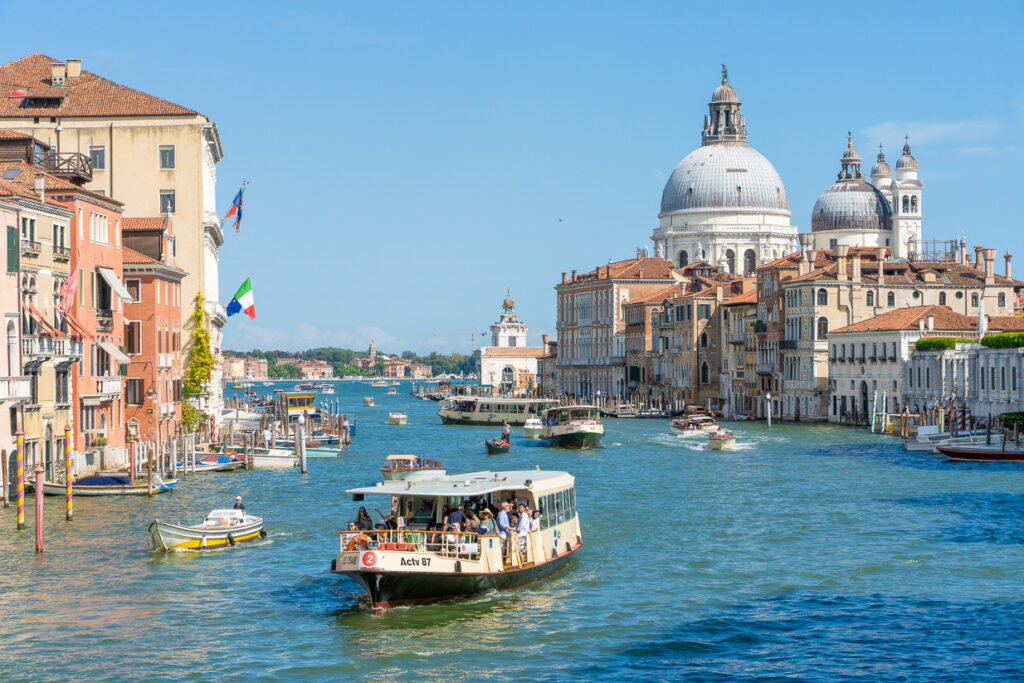
What does the abbreviation ACTV stand for?
The abbreviation ACTV stands for: Azienda del Consorzio Trasporti Veneziano.
In German, this would mean: Transportation companies of the Venetian Transportation Consortium.
The name has its roots in the company's history. Today, the official company name is ACTV S.p.A.
Who or what is ACTV?
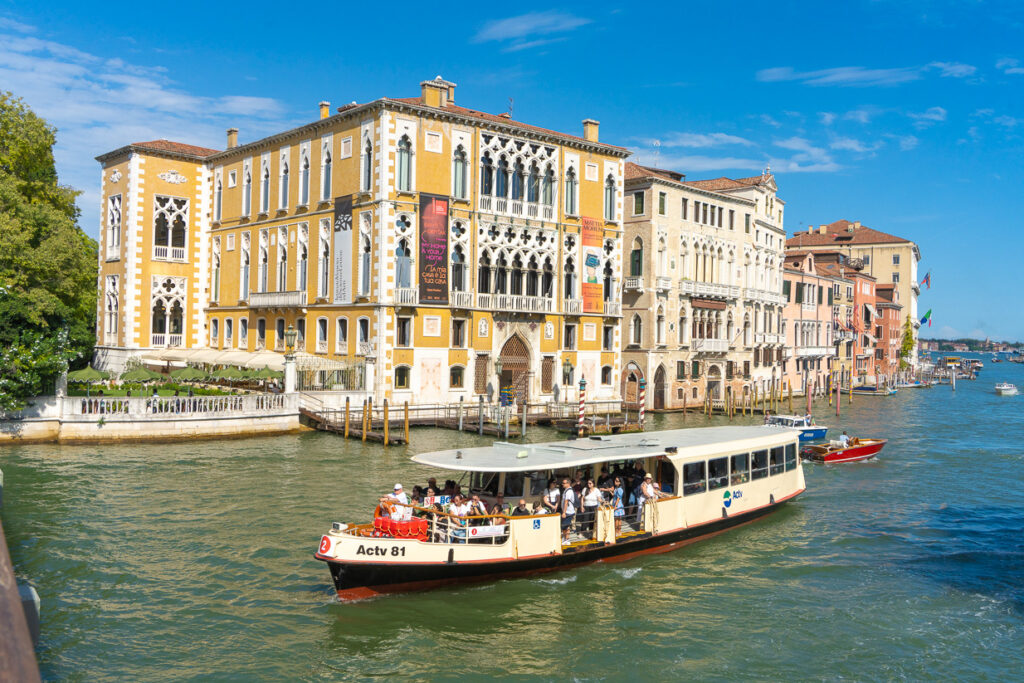
The roots of public water transportation date back to 1881. The company known as ACTV, however, did not begin operations until 1978. This distinction is important and deserves its own chapter in the history of the company.
ACTV is the leading public transportation company in Venice and is part of the municipal corporate group AVM (Azienda Veneziana della Mobilità). The company operates a large portion of the public transportation system in Venice and on the surrounding mainland. What sets it apart: ACTV operates both water and land transportation services.
In Venice's historic Old Town, the vaporetti—the public water buses—are the most well-known form of transportation. On the mainland, however, particularly in Mestre and Marghera, buses and trams play an important role.
ACTV is therefore much more than just a company that transports tourists across the Grand Canal. It is an essential part of the transportation infrastructure of an entire metropolitan area.
What role does ACTV play in the daily lives of Venetians?
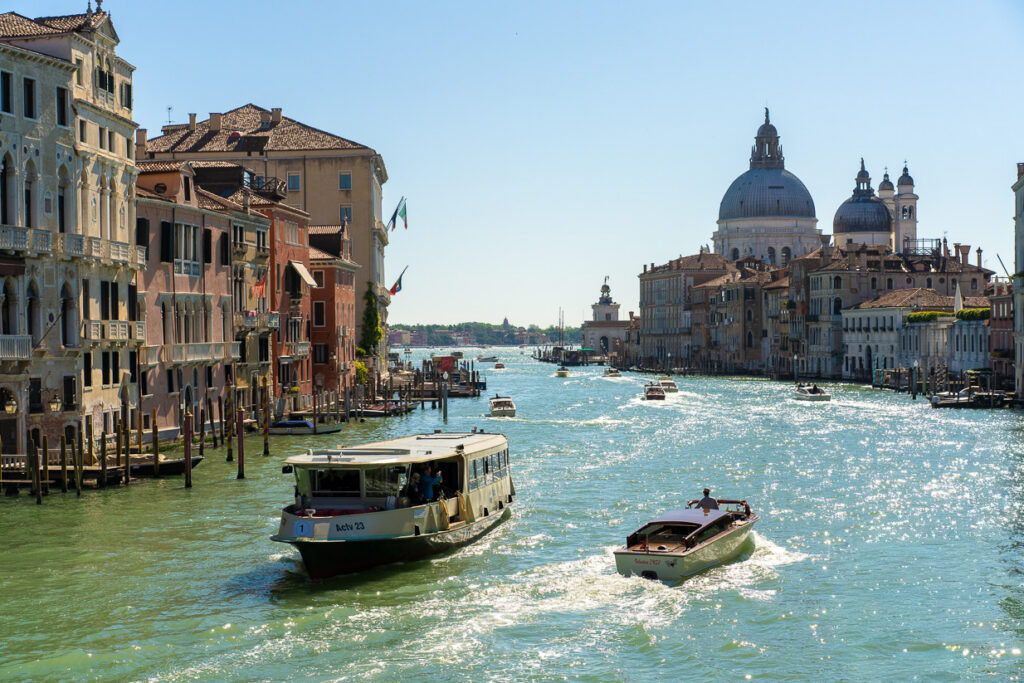
For the residents of Venice, ACTV is not a tourist attraction, but an indispensable part of daily life. Anyone who lives on Murano and works in Venice’s historic center needs to take a vaporetto every day. Schoolchildren and college students use it to get to class, working people to get to their jobs, and older adults to get to doctor’s appointments or to go shopping.
The connections between Venice, the Lido, the islands of the lagoon, and the mainland are also of great importance. While in other cities buses and trams connect the various neighborhoods, in Venice public boats often serve this purpose.
It is important to note that not all water transportation is operated by ACTV. Freight deliveries, garbage collection, emergency services, and private water taxis have their own operators and functions. Without public water transportation, daily life in many parts of the lagoon city would be considerably more difficult.
What role does ACTV play for tourists?
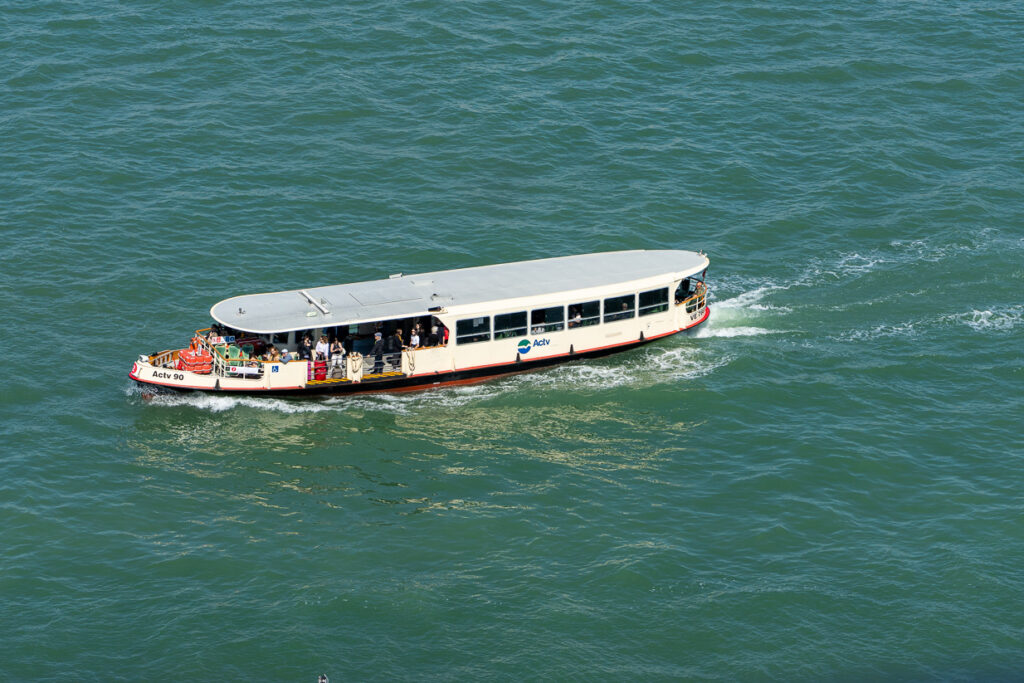
For you as a visitor to Venice, the ACTV is also one of the city’s most important modes of transportation. With the vaporetti, you can reach numerous sights and explore the city’s different neighborhoods.
Line 1 is particularly well-known, which travels along the Grand Canal and stops at numerous stations. During this ride, visitors experience Venice from a perspective that isn't possible from the streets and alleys.
In addition, ACTV boats connect the historic Old Town with popular tourist destinations such as Murano, Burano, Torcello, and the Lido.
However, tourists don't need to take a vaporetto for every trip. Many attractions in the historic old town are easily accessible on foot. It is precisely the combination of walking and vaporetti that makes it possible to get to know Venice in different ways.
For you, the ACTV is therefore a convenient mode of transportation and, at the same time, an opportunity to experience Venice’s unique urban landscape to experience it from the water.
The History of the ACTV – From the First vaporetto to Modern Public Transportation
The history of public transportation in Venice is closely linked to the city's development. While other European cities were expanding their streetcar networks in the 19th century, Venice developed a public transportation system on the water.
For centuries, gondolas and other rowboats were the primary means of transportation within the lagoon city. It was not until the advent of steam-powered ships that public transportation began to undergo fundamental changes.
1881 – The first public steamboats on the Grand Canal
The year 1881 marked a decisive turning point. That year, regular public service began on the Grand Canal using steam-powered boats. The new boats soon came to be known colloquially as “vaporetti,” a term derived from the Italian word vapore for steam.
Unlike gondolas, these boats could carry numerous passengers at the same time. They operated on fixed schedules and stopped at specific docks. This laid the foundation for today's public water transportation in Venice.
The introduction of steamboats, however, was not without controversy. Gondoliers, in particular, saw the new mode of transportation as economic competition. In addition, the motorized boats altered the traditional landscape of transportation on the Venetian canals.
The Early 20th Century – Expansion of Public Transportation
As the demand for regular transportation services grew, the route network continued to expand. Public boats were no longer used exclusively for promotion along the Grand Canal. Connections between different parts of the lagoon also became increasingly important.
At the same time, a separate public transit system developed on the mainland. As the metropolitan area grew, the connections between Mestre, Marghera, and Venice became increasingly important.
This gave rise to two distinct modes of transportation: boat traffic in the lagoon and road traffic on the mainland.
1978 – The Founding of the ACTV
A decisive step toward the organization’s current structure was taken in 1978. That was when ACTV was established as a joint public transportation agency for the Venetian region. The goal was to better integrate the previously separate water and land transportation services.
The founding of the ACTV was therefore not the beginning of public transportation in Venice. Rather, existing transportation structures were consolidated into a new organization. This distinction is important: Public vaporetto service began in 1881, but the ACTV company was not established until 1978.
1890 to 1930 – Public Water Transportation Becomes a Municipal Responsibility
Further development took place in several stages.
1890 The Italian company Società Veneta Lagunare took over operations from the French company. It expanded the service to include additional routes within the lagoon and to the mainland.
1903 The City of Venice decided to organize inner-city water transportation on its own. To this end, the Azienda Comunale per la Navigazione Interna (ACNI) was founded.
1930 The municipal boat service was expanded further. The company took over additional lagoon routes, including those to Burano and Chioggia, and was renamed ACNIL—Azienda Comunale di Navigazione Interna Lagunare.
Late 1930 At that time, the company already had 57 ships with a total stated passenger capacity of 11,750.
1933 – The Road Connection to Venice
With the opening of the road bridge (Ponte della Libertà) between the mainland and Venice in 1933, the traffic situation changed fundamentally. For the first time, motor vehicles were able to drive across the Venetian Lagoon to the newly built transportation hub, Piazzale Roma.
At the same time, new opportunities arose for public water transportation. A faster route to Rialto and St Mark’s Square was established via the Rio Novo. Smaller, more maneuverable motorboats were used for this purpose.
World War II and the Reconstruction
During World War II, public shipping was significantly disrupted. Numerous ships were requisitioned for military purposes. After the war ended, many vessels were damaged, sunk, or no longer operational.
In the years that followed, large parts of the fleet had to be restored. Piers, floating stops, and technical facilities were also repaired or rebuilt. By 1950, the transit services had been comprehensively reorganized.
1965 – Mainland traffic is added
In 1965, the municipal transportation authority also took over local public transportation in Mestre and Marghera. Trolleybuses, among other vehicles, had previously operated there. These were gradually replaced by conventional buses. On December 21, 1966, the last trolleybus line in Mestre was discontinued. As a result, public water transportation and road transportation became increasingly integrated from an organizational standpoint.
1978 to the present – ACTV is formed from several transit companies
On October 1, 1978, the Azienda del Consorzio Trasporti Veneziano (ACTV) began operations. The new company initially incorporated the existing companies ACNIL, SVET, and SVA. Other smaller transportation companies were added later. In December 2000, the company’s organizational structure was converted into the joint-stock company ACTV S.p.A. Today, ACTV is part of the AVM Group and operates public transportation services both on water and on land.
An Overview of Key Dates
| year | Event |
|---|---|
| 1881 | The First vaporetto, the „Regina Margherita“ |
| 1890 | Acquisition by Società Veneta Lagunare |
| 1903 | Establishment of the Municipal ACNI |
| 1930 | Expansion of ACNIL |
| 1933 | Opening of the Road Bridge and Piazzale Roma |
| 1945–1950 | Postwar Reconstruction and Reorganization |
| 1965 | Takeover of Local Transit Services in Mestre and Marghera |
| 1978 | Start of ACTV Operations |
| 2000 | Conversion to ACTV S.p.A. |
ACTV’s modes of transportation—on the water and on land
Venice has one of the most unusual public transportation systems in Europe. While buses, trams, and subways handle local transportation in most cities, boats play a central role in Venice. The public transportation company ACTV operates both public boat services within the lagoon and bus and tram lines on the mainland.
The various modes of transportation serve different purposes. Small, agile vaporetti operate on the Grand Canal, larger ships connect the islands of the lagoon, and ferries even carry motor vehicles across the water. On the mainland, buses and streetcars handle a large portion of public transportation.
The vaporetti – Venice's vaporetti
The ACTV's best-known mode of transportation is the vaporetto. The name dates back to the era of steam-powered shipping and has remained in use to this day, even though modern vaporetti are no longer powered by steam engines.
A vaporetto works much like a public bus. It follows a set route, stops at specific stops, and transports passengers according to a published schedule. Among other places, the vaporetti connect Santa Lucia Station, Piazzale Roma, the Rialto Bridge, and St Mark’s Square.
Lines 1 and 2 are particularly well-known, as they travel along different routes through the Grand Canal. For residents, the vaporetti are an everyday mode of transportation. For tourists, they also offer the chance to explore the city from the water.
The Motonavi – Larger Boats for the Lagoon
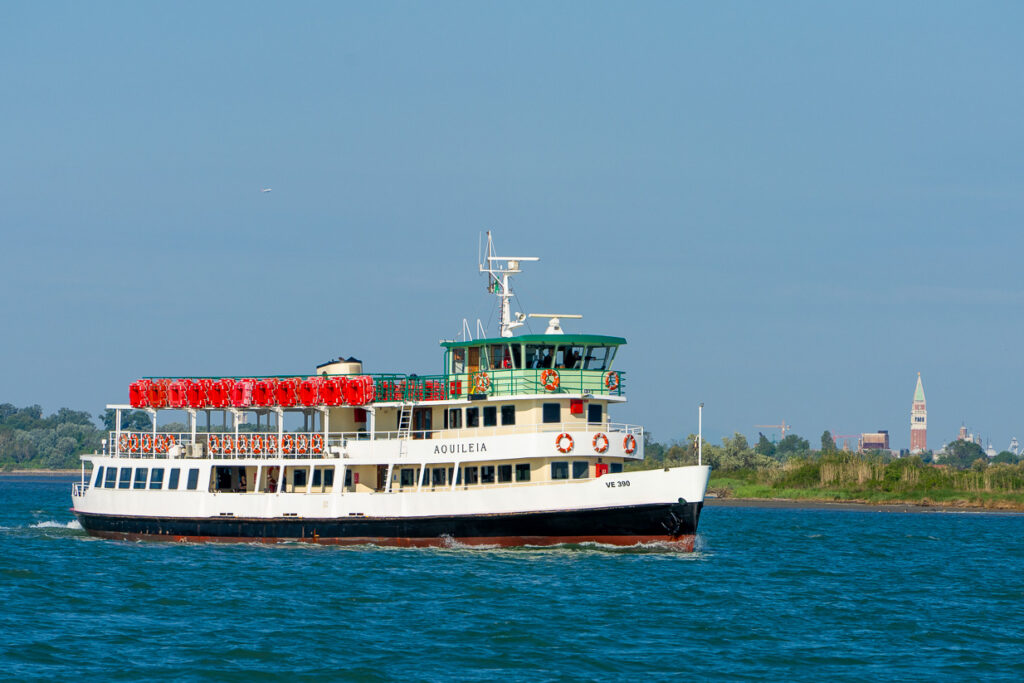
In addition to the traditional vaporetti, ACTV operates larger passenger vessels known in Italian as “motonavi.” These vessels have a greater passenger capacity and are particularly well-suited for routes across the open waters of the lagoon. For example, they are used on heavily traveled routes between Venice and the Lido, as well as on other lagoon routes.
Motonavis are generally larger than the vaporetti that operate on the narrow inner-city waterways. They are designed to carry large numbers of passengers and cover longer distances. For visitors, the distinction is usually not important. They choose a line based on their destination, not on the type of boat used.
The Motobattelli – More Vaporetti in the ACTV Fleet
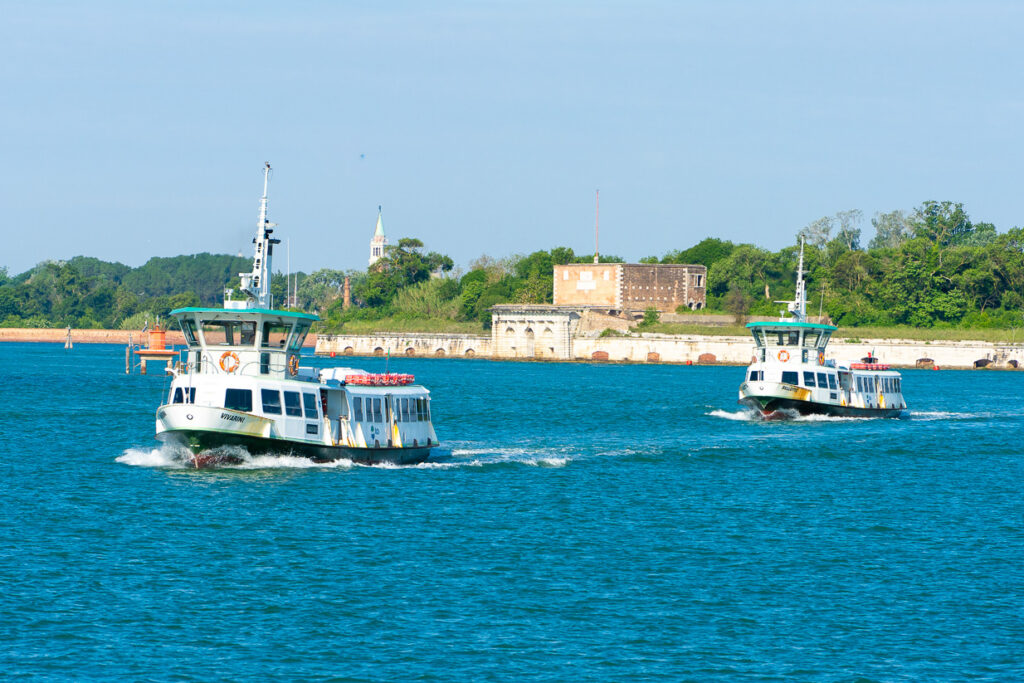
The Italian term "motobattello" refers to a motorized passenger vessel. In common usage, the terms "vaporetto" and "motobattello" are sometimes used interchangeably. Technically, however, and within the fleet, there are differences between the various types of vessels.
ACTV uses different designs and sizes, depending on the route, water conditions, and required passenger capacity. Various types of motobattelli can be found especially on the routes between the historic old town and the islands in the lagoon.
In general, the fare and transportation regulations of the respective ACTV line apply to passengers, regardless of the type of vessel used.
Ferries – When Cars Have to Cross the Water, Too
A distinctive feature of Venice's local public transportation system is the car ferries, known as "ferry boats." They primarily connect Tronchetto with the Lido of Venice.
Unlike regular vaporetti, these ferries can carry not only passengers but also cars, motorcycles, and other registered vehicles. This is necessary because the Lido has a road network but no road bridge connecting it to the Venetian mainland. The car ferries thus enable vehicle traffic between the Lido and the rest of the road network.
For tourists who explore Venice exclusively on foot, these ferries usually play a minor role. Nevertheless, here's a tip for all aspiring photographers: A ferry ride past the city skyline is really a must-do. That's why it's good to know that the ferry is operated by ACTV, and therefore a ferry ride for pedestrians is included in the regular ticket
For the residents of the Lido and for delivery and supply traffic, however, they are important.
Buses – Public Transit on the Mainland
In addition to its ferry service, ACTV operates an extensive bus network. Among other destinations, the buses connect Mestre, Marghera, Favaro Veneto, and other towns with the historic city of Venice.
An important route runs across the Ponte della Libertà, the road bridge connecting the mainland to Venice. Most buses terminate there at Piazzale Roma. ACTV buses also operate on the Lido and on Pellestrina, where they serve as an important means of transportation for residents and visitors alike. The service includes city buses, suburban buses, and regional routes.
The Streetcar – Tram Service Between Mestre and Venice
Another mode of transportation is the streetcar, known as a “tram” in Italian. It connects major neighborhoods on the mainland and provides a direct connection to Piazzale Roma in Venice.
The network consists of two lines:
- T1: Favaro Veneto – Mestre – Venice Piazzale Roma
- T2: Mestre – Marghera
One technical feature is the Translohr system used. Unlike traditional streetcars, these vehicles run on rubber tires and are guided by a central track. The streetcar complements the bus network and is part of the ACTV public transit system.
The People Mover – The Automated Elevated Train
The People Mover is an automated, cable-driven transit system. It connects three stations:
- Tronchetto
- Marittima
- Piazzale Roma
The route is about 822 meters long and runs along an elevated track. The People Mover takes about four minutes to travel from Tronchetto to Piazzale Roma. It is particularly convenient for visitors who park their cars at Tronchetto and then want to reach the historic city center.
An important organizational distinction: The People Mover was developed by AVM and is not simply another ACTV vehicle. However, it is part of the integrated public transit system, and various ACTV tickets can be used on it.
An Important Note for Visitors
Not all public or commercial water transportation services are operated by ACTV. Alilaguna’s airport boats, private water taxis, gondolas, and numerous sightseeing boats are operated by other companies. Therefore, ACTV tickets are generally not valid on these services.
When planning your trip, be sure not to confuse the different providers.
The ACTV Route Network – How to Get Around Venice and the Venetian Lagoon
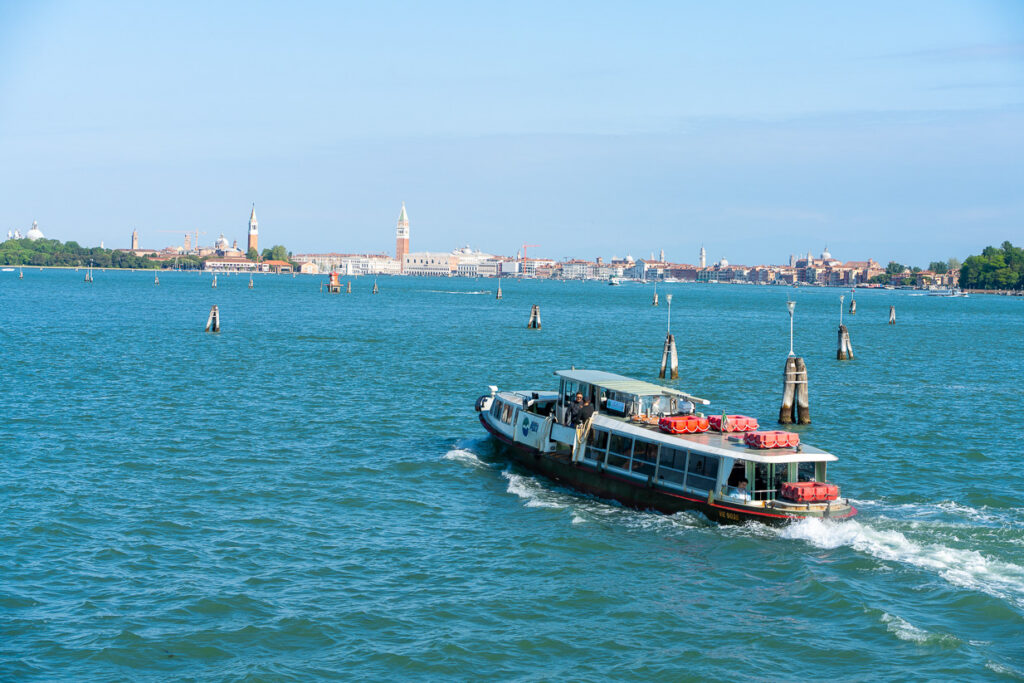
The ACTV route network differs fundamentally from the public transit systems of other European cities. While in Rome, Milan, or Munich you travel by subway, tram, and bus, in Venice’s historic old town, boats primarily serve this purpose.
The public vaporetti connect the city’s main neighborhoods, attractions, and islands in the lagoon. There isn’t just one type of water bus service. Some routes run along the famous Grand Canal, while others circle the historic city center or connect Venice with the islands of Murano, Burano, Torcello, and the Lido.
When you visit Venice, you certainly don't need to know the entire transit network. It's enough to understand which lines are important for your destination and where you can board a bus going in the right direction.
The main sections of the transit network
The ACTV network can be divided into several sections, each of which performs different functions.
The Grand Canal – The City's Most Important Waterway
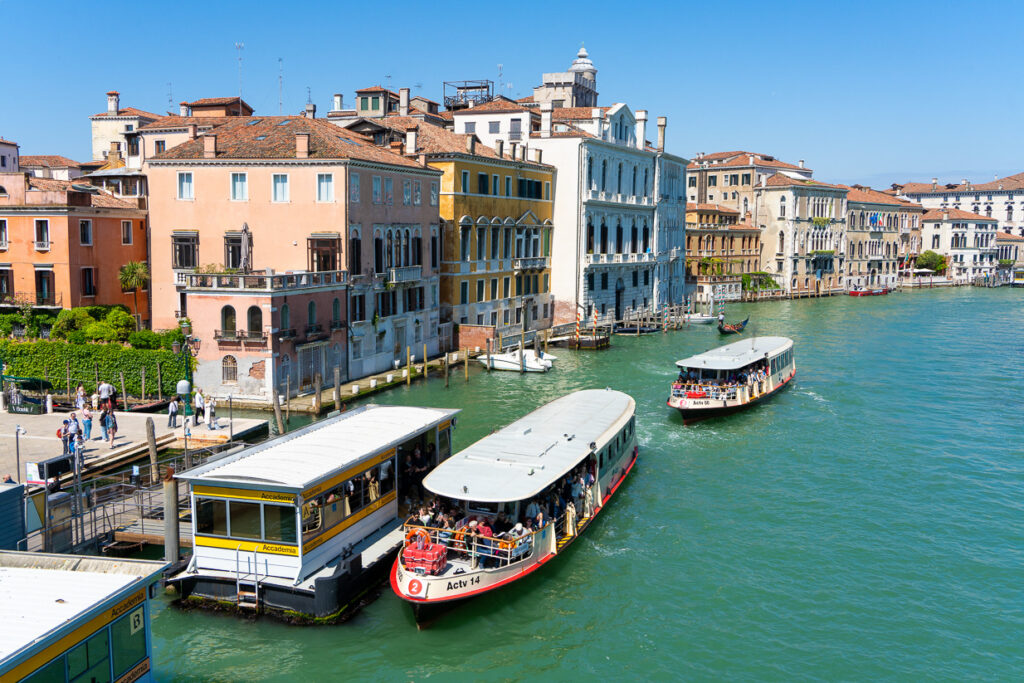
The Grand Canal is Venice's most famous waterway. It winds through the historic city center in a large S-shape and connects the area around Santa Lucia Station and Piazzale Roma with the area around St Mark’s Square.
Lines 1 and 2, in particular, run through here.
Line 1 stops at numerous stations along the Grand Canal. It's especially convenient if you want to get off at different stops along the way or admire the palaces along the riverbank.
Line 2 stops at fewer stations along its route through the Grand Canal and is therefore faster on many trips. Depending on the schedule, it also travels via the Giudecca Canal.
The routes around the historic Old Town
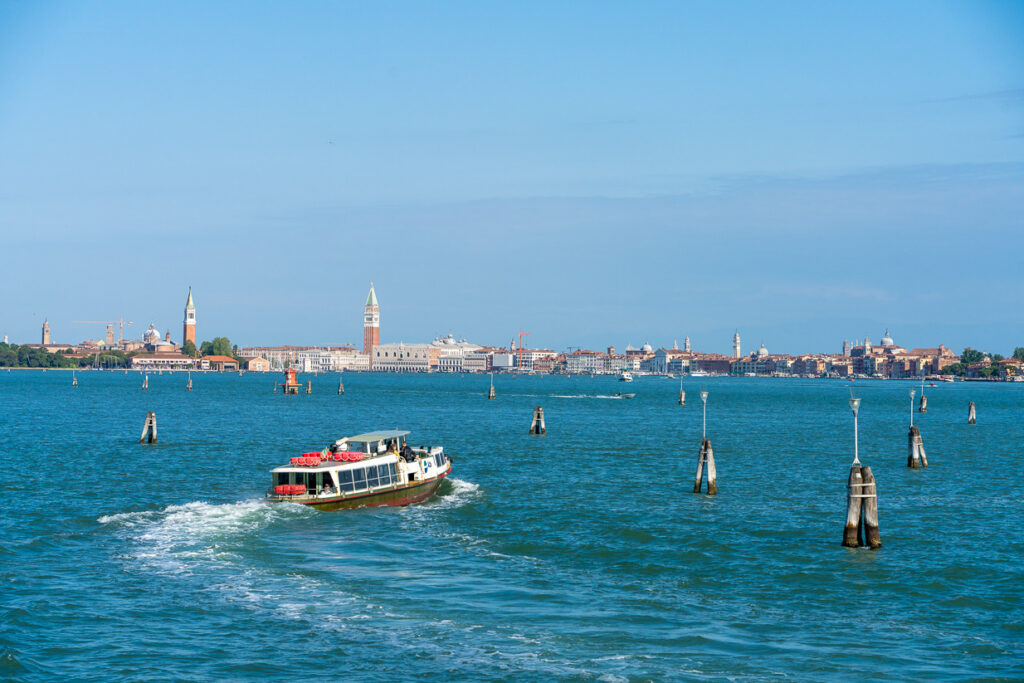
Not all vaporetti travel along the Grand Canal. Some routes run around the historic city center. Among other places, they connect Fondamente Nove, the train station, Piazzale Roma, the Giudecca, and the area around St Mark’s Square.
Lines 4.1, 4.2, 5.1, and 5.2 are particularly important.
These routes are convenient if you want to reach a destination on the outskirts of the historic Old Town without having to travel along the Grand Canal. Lines 4.1 and 4.2 run in opposite directions on their circular routes and also serve Murano. Lines 5.1 and 5.2 supplement the network with additional connections, particularly to the Lido.
The Islands of the Northern Lagoon
The islands of Murano, Burano, and Torcello are among the most popular destinations in the lagoon. Murano is particularly well-known for its traditional glassmaking. Burano stands out for its colorful houses and its history of lace-making. Torcello is one of the oldest inhabited places in the lagoon and boasts significant historic buildings.
These islands are accessible via public boat services. An important departure point is Fondamente Nove, located in the northern part of the historic city center. From there, boats depart for Murano and on to other islands in the lagoon. Line 12 is particularly important for connections to Burano and the northern lagoon.
The Lido and the Southern Lagoon
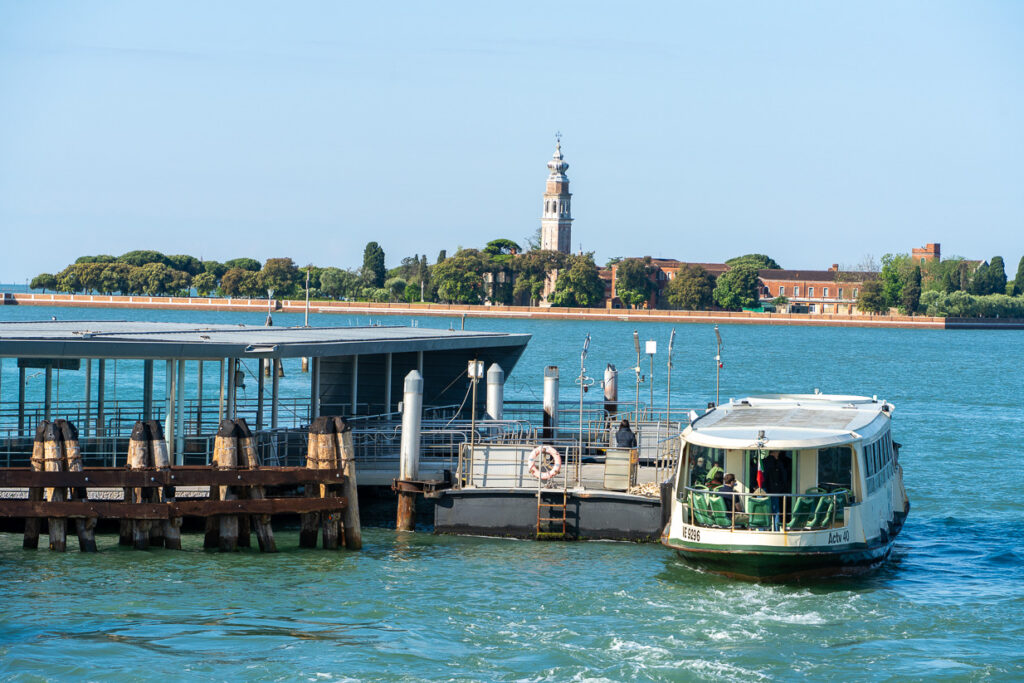
The Lido is a long, narrow island located between the Venetian Lagoon and the Adriatic Sea. Unlike the historic city center, it has streets and regular car traffic. The main ferry terminal is called Lido Santa Maria Elisabetta, often abbreviated as Lido S.M.E. From there, you can take buses to the various parts of the Lido.
Further south lies the island of Pellestrina. It, too, is connected to the public transit network via a combination of boat and bus services. Line 11 plays a key role in connecting Lido, Pellestrina, and Chioggia.
The Most Important Lines at a Glance
The following table shows the basic routes of selected lines. It is intentionally not a complete schedule.
| Line | Important Connection |
|---|---|
| 1 | Piazzale Roma – Train Station – Grand Canal – St Mark’s Square – Lido |
| 2 | Piazzale Roma – Train Station – Rialto – St Mark’s Square, as well as connections via Giudecca and Tronchetto |
| 3 | Piazzale Roma – Train Station – Murano |
| 4.1 / 4.2 | Circular tours around the Old Town, including Murano |
| 5.1 / 5.2 | Circular routes around the Old Town with a connection to the Lido |
| 12 | Fondamente Nove – Murano – Burano – Northern Lagoon |
| 14 | San Zaccaria – Lido – Punta Sabbioni, depending on the schedule |
| 17 | Tronchetto–Lido Car Ferry |
| 20 | San Zaccaria – San Servolo – San Lazzaro degli Armeni |
| N | Nighttime traffic on major waterways |
The routes of individual lines may change throughout the year.
The Main Transfer Points
Some stops are particularly important for the entire transit network.
Piazzale Roma: This is where road traffic from the mainland ends. You can transfer from buses and streetcars to the vaporetti.
Ferrovia (train station): This stop is located right next to the Venezia Santa Lucia train station. It is one of the most important starting points for train travelers.
Rialto: The stops around the Rialto Bridge provide access to one of the central areas of the historic Old Town.
San Marco / San Zaccaria: There are several major piers near St Mark’s Square. Boats depart from here in various directions.
Fondamente Nove: This area in the northern part of the Old Town is particularly important for connections to Murano, Burano, and other islands.
Lido Santa Maria Elisabetta: This is where several ferry routes and bus lines converge on the Lido.
Why the direction of travel is so important
It's especially easy to end up going the wrong way on the circular routes. Routes 4.1 and 4.2, as well as 5.1 and 5.2, serve some of the same areas but run in opposite directions.
For example, if you take Line 4.1 instead of Line 4.2, you may still reach your destination, but it will take much longer. Therefore, pay attention not only to the line number, but also to the direction of travel displayed and the stops along the route.
At major stops such as San Zaccaria, there are also several separate piers. These are marked with letters. Not every boat departs from every pier. The assignments have been partially changed in recent years to better organize passenger flow.
The ACTV Route Network on a Map
When planning your trip, you should first get an overview of the locations of the stops. On the official ACTV network map, you can identify the different lines by their numbers and colors. The map shows you which stops are connected and where you can transfer.
Official ACTV Route Map
Seasonal Changes and Special Traffic Conditions
The route network does not remain unchanged throughout the year. During the summer season, some routes are extended or new ones are added. In the fall and winter, some of these routes are suspended again. For example, in September 2026, the seasonal routes 8 and 18 were suspended, and the extension of Route 2 to the Lido was discontinued.
Fog and unusually high water levels can also cause changes in boat traffic. Therefore, check the current schedules and traffic reports the day before your trip, if possible. ACTV strongly recommends this for long-term schedule inquiries.
Special Passengers on ACTV—Children, People with Disabilities, and Travelers with Luggage
ACTV's public transportation is used daily by a wide variety of people. These include commuters, students, families with young children, seniors, people in wheelchairs, and tourists with luggage.
Venice, in particular, has a few unique features in this regard. The vaporetto stops are located on floating piers connected to the shore by gangways. Depending on the water level, the type of boat, and the stop, conditions for boarding and disembarking may vary.
If you are traveling with children, a stroller, a wheelchair, or large pieces of luggage, there are a few things you should keep in mind. In general, you can use the ACTV’s public vaporetti even with small children.
For families, the vaporetti are often a convenient way to avoid long walks through the city. Especially with small children, Venice’s many bridges and stairs can be exhausting.
Under the regular ACTV fare regulations, children under the age of six may ride for free when accompanied by an adult. Children six years of age and older generally need their own valid ticket, unless a special discount applies.
If you are traveling with small children, be sure to hold on to them especially tightly when boarding and disembarking. The floating docks move slightly, and a small gap may form between the ship and the dock.
Strollers and Buggies
Strollers and buggies may generally be brought aboard ACTV public transportation, provided that the applicable terms of carriage and space constraints are observed. However, not all vessels are built the same. Some have more spacious boarding areas, while others offer less room. A large stroller can be a hindrance, especially when the vessel is crowded.
If you’re bringing a stroller, make sure it doesn’t block any aisles or emergency exits. The staff can help you find a suitable spot if necessary. A foldable stroller is often more practical for a visit to Venice than a large stroller. This applies not only to the vaporetti but also to the numerous bridges with stairs.
People with limited mobility and wheelchair users
For people with limited mobility, using the public vaporetti is especially important. The vaporetti make it possible to travel longer distances through Venice without having to cross numerous bridges.
Many ACTV vessels and stops are accessible to wheelchair users. However, you should not assume that every route is accessible under all circumstances. Actual accessibility depends, among other things, on the vessel used, the dock, water levels, and any technical limitations.
If you use a wheelchair, I recommend checking the official accessibility information before your trip. It’s also important to distinguish between a ship that is accessible and a destination that is accessible by wheelchair. Even if you can easily get off the vaporetto at a stop, the walk from there may involve bridges with stairs.
ACTV offers special fare arrangements for certain passengers with disabilities. You should check the current eligibility requirements to see if these apply to you.
Elderly passengers
For older people, the vaporetti are often a pleasant alternative to long walks through Venice. However, getting on and off, as well as standing during the ride, can be difficult. The boat may rock, especially when docking, departing, or in rough waters.
If you have trouble walking, you should try to find a seat and hold on tightly during the ride. Busy routes like Line 1 can get very crowded, especially during peak travel times. Therefore, be sure to allow plenty of time and, if possible, avoid times when the buses are particularly crowded.
Travelers with suitcases and larger pieces of luggage
If you're arriving by train at Santa Lucia Station or want to travel from Piazzale Roma to your hotel, you can generally take your luggage with you on the vaporetto. However, there are size and quantity restrictions on luggage that can be carried for free.
According to the published ACTV Terms and Conditions of Carriage, passengers are generally allowed up to three pieces of luggage, each with a total of the three dimensions not exceeding 150 cm. Special rules may apply to larger or additional pieces of luggage.
Please place your luggage so that it does not obstruct other passengers. In particular, keep entry and exit areas clear. If you are traveling with several large pieces of luggage, you should also keep in mind that you may have to cross several bridges with stairs on your way to your hotel.
Dogs and Other Pets
Dogs and other pets may also be transported on ACTV public transportation under certain conditions. Special regulations regarding the restraint and supervision of dogs apply. These include, in particular, the use of a leash and the required muzzle precautions. Small animals may be brought along in appropriate carriers.
If you are traveling with a pet, you should check the current regulations in advance. Bringing a pet on board must not compromise the safety or freedom of movement of other passengers.
Bicycles and other bulky items
Special restrictions apply to bicycles on vaporetti. You must not assume that, ...that you can bring your bicycle on any vaporetto line. Bicycles are allowed only on certain routes and subject to the applicable conditions.
For example, if you want to ride a bicycle to the Lido or Pellestrina, you should check in advance which routes are permitted for this. Restrictions may also apply to other bulky items.
Important Information for Your Trip
If you have special needs while traveling, I recommend that you read the current ACTV terms and conditions of service before your trip.
There you will find the official regulations regarding children, baggage, wheelchairs, pets, and other special travel situations.
ACTV for Locals – Public Transportation as Part of Everyday Life in Venice
If you're visiting Venice as a tourist, you'll probably use the ACTV vaporetti to get to St Mark’s Square, the Rialto Bridge, or the islands of Murano and Burano.
For the residents of Venice, however, these same boats have a completely different meaning. They are a natural part of everyday life. What may be an interesting ride down the Grand Canal for you during your vacation could be a Venetian’s daily commute to work, school, the grocery store, or a doctor’s appointment.
In a city where the historic center has no ordinary streets and no private car traffic, public water transportation fulfills the roles that buses, trams, or subways play elsewhere.
The Daily Commute to Work
Many people who work in the historic old town do not live right near their workplace. Some live on the Lido, Murano, or other islands in the lagoon. Others live on the mainland, for example in Mestre or Marghera. For them, ACTV is an important link between their homes and their workplaces.
If you live on the mainland, you can take the bus or tram to Piazzale Roma and transfer to a vaporetto there. Others reach Venice by train and continue their journey from the Santa Lucia train station on foot or by vaporetto.
There’s one thing you should keep in mind: Not every Venetian takes a vaporetto every day. Many residents get around the historic city center on foot. Especially for shorter distances, that’s often faster.
Schoolchildren and college students
Public transportation is also very important for high school students, apprentices, and college students. For example, someone who lives on one of the islands in the lagoon and attends a high school in the historic old town may need to rely on a ferry service on a regular basis.
The same applies to students who commute between their homes and the university campuses in Venice and Mestre. Personal commuter passes and season tickets are available for regular travel. Special fares may apply depending on age, place of residence, and other criteria.
The Residents of the Lagoon Islands
The importance of the ACTV is particularly evident on the islands of the lagoon. Murano, Burano, Torcello, the Lido, and Pellestrina are not merely tourist destinations. People live on these islands and need to go about their daily lives. They rely on transportation to schools, workplaces, medical facilities, government offices, and stores.
For many of these routes, public boat service is essential. For example, when you visit Burano, you’ll take the same route as residents returning home from an appointment in Venice.
On the Lido and Pellestrina, buses supplement the ferry service. There are roads and regular vehicle traffic there, so public transportation consists of multiple modes of transport.
Shopping, doctor's appointments, and everyday errands
Not every island has all the amenities its residents need. For certain shopping trips, appointments with specialists, or visits to government offices, residents may therefore need to travel to other parts of the city or to the mainland. Reliable public transportation is especially important for older adults who do not own a car or can no longer walk long distances.
Vaporetti enable many people to manage their daily lives independently. The reliability of the service is at least as important as the travel time. Anyone who needs to make it to a doctor’s appointment or start work on time relies on predictable departure times.
The Venezia Unica Card for Residents
For residents and regular users of public transportation, there is the personal Venezia Unica card. This electronic card provides access to special tickets and passes. The fares you are eligible for depend, among other things, on your place of residence, your age, and your personal customer profile.
The card is not exclusively reserved for residents of Venice. Other people can also apply for it under certain conditions. However, the benefits vary. It is particularly important for residents because they can regularly use public transportation under different terms than visitors who purchase standard tourist tickets.
Preferred access point for residents and commuters
An interesting feature of the ACTV is the priority boarding for certain groups of passengers. There are separate entrances at select vaporetto stops. You can recognize them by the signs:
- ALL PASSENGERS: Access for all passengers.
- PRIORITY VENEZIA UNICA: Priority boarding for eligible passengers.
Those eligible include, among others, residents of the City of Venice with a valid Venezia Unica card, certain commuters and students, as well as passengers in wheelchairs. This policy is intended, in particular, to support people who regularly rely on public transportation.
For you as a tourist, this means: Even if you have a valid ACTV ticket, you may use priority access only if you belong to one of the eligible groups.
When Tourism and Everyday Life Collide
In Venice, residents and tourists often use the same public transportation. While this is convenient in some ways, it also presents unique challenges. While vacationers often have time to spare and want to enjoy the ride, commuters and students rely on connections that are as punctual as possible. The vaporetti can get very crowded, especially during the peak tourist season.
When traveling by vaporetto, please keep in mind that other passengers may be on their way to work or home. Keep the boarding and disembarking areas clear, be considerate of passengers with limited mobility, and follow the crew’s instructions. This way, you’ll help ensure that public transportation runs as smoothly as possible for all passengers.
More Than Just a Means of Transportation—A Necessity for Life in the Lagoon
The importance of the ACTV extends far beyond the transportation of passengers. A reliable public transportation network is essential for enabling people to live and work even on the smaller islands in the lagoon.
Without regular ferry service, daily life on many islands would be much more difficult. Schools, workplaces, medical care, and numerous other facilities would be accessible only with considerably greater effort. ACTV is therefore not just a transportation company for visitors to Venice, but an important part of public services.
Technical Features of the ACTV – The Ships and Their Technology
ACTV's public vaporetti are specially designed to handle the unusual traffic conditions in Venice and the Venetian Lagoon. While ordinary city buses travel on roads, the vaporetti must cope with fluctuating water levels, currents, waves, narrow canals, and heavy boat traffic.
There is another unique feature: The boats must dock daily at numerous floating stops, often just a few minutes apart. The technology of a vaporetto therefore differs significantly from that of a typical sightseeing boat.
Why ACTV Needs Different Types of Ships
Not every boat is suitable for every route. On the Grand Canal, the waterways are relatively narrow. Here, boats often have to dock, set off again, and maneuver around other boats. Conditions are different on the open waters of the lagoon. There, longer distances, wind, and waves can play a greater role.
ACTV therefore uses different types of vessels, each tailored to its specific area of operation. The main categories include the classic vaporetti, smaller motoscafi, various motobattelli, larger motonavi, and car ferries.
The differences relate not only to the size and number of passengers, but also to the draft, propulsion, maneuverability, and the design of the boarding and disembarking areas.
The size and carrying capacity of the ships
The differences between the types of ships are considerable. A smaller passenger ship can accommodate only a few dozen people. The larger Motonavi, on the other hand, were built to carry several hundred to over a thousand passengers.
A particularly interesting example is the new 400 Series Motobattelli, also known as Caffettiere. These vessels are approximately 31 meters long, more than 5.5 meters wide, and designed to carry up to 400 passengers. Among other features, they are equipped with air conditioning, passenger information systems, and seating for people with disabilities.
The various types of vessels allow ACTV to tailor its transport capacity to the needs of each route.
The Propulsion System – How Does a Vaporetto Move?
Most traditional ACTV vessels are powered by diesel engines. The engine transmits its power to a ship's propeller. Different propulsion systems are used depending on the type of vessel.
Some ships are equipped with what are known as azimuth thrusters. These allow the direction of the propeller thrust to be adjusted, enabling the ship to maneuver with exceptional precision. This is of great importance in Venice. When docking, skippers often have to maneuver their vessels in tight spaces between other boats, docks, and embankments.
For example, ACTV uses propulsion systems from the manufacturer Schottel on certain Motobattelli and Motonavi vessels.
The Floating Bus Stops—A Venetian Specialty
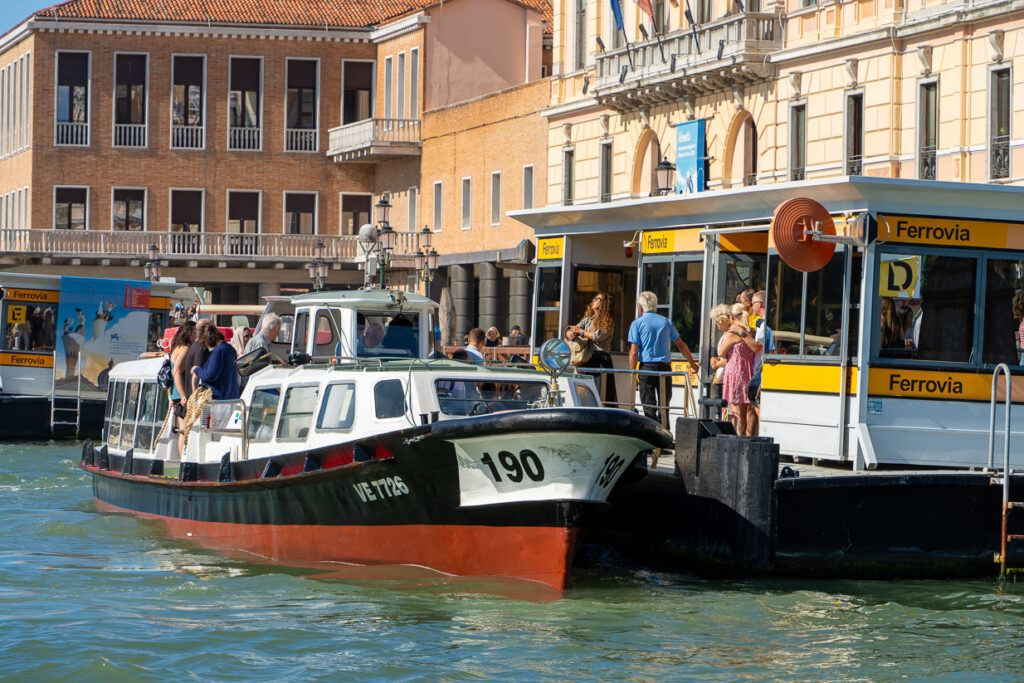
Public vaporetti stops differ significantly from ordinary bus stops. Many ACTV stops consist of floating pontoons that are moored to the shore and accessible via movable boarding ramps. The key advantage is that the floating docks rise and fall with the water level.
As a result, the difference in height between the ship and the dock remains relatively small, even when the water level in the lagoon changes. This makes it easier for passengers to board and disembark and is particularly important for people with limited mobility.
The pontoons must simultaneously withstand the stresses caused by waves, currents, and frequent docking maneuvers. In its fleet description, ACTV lists approximately 160 ships as well as about 100 floating stations. These figures represent a published inventory; they are not a daily count.
Navigation and Communication
Although the ships often travel along familiar routes, they require reliable navigation and communication technology. ACTV ships are equipped with radio systems for communicating with the operations center, as well as satellite-based positioning systems.
ACTV specifically refers to this as DGPS, a system for improved positioning using satellite signals. This enables the operations center to monitor vessel traffic and respond to operational disruptions.
For boat operators, however, keeping a close watch on their surroundings remains crucial. Especially on the Grand Canal, they must be on the lookout for numerous other watercraft, including gondolas, private motorboats, water taxis, and transport boats.
Security and Technical Surveillance
ACTV vessels are subject to specific safety requirements. These include regular technical inspections, maintenance work, and verification of the permitted passenger capacity.
The ships are registered with the Italian shipping registry RINA. Among other things, RINA is responsible for technical inspections and the classification of ships. In addition to technical safety, crew training and the organization of passenger boarding and disembarkation also play an important role.
Therefore, when boarding at a stop, please follow the crew's instructions and keep the boarding and exiting areas clear.
Car Ferries—A Special Technical Challenge
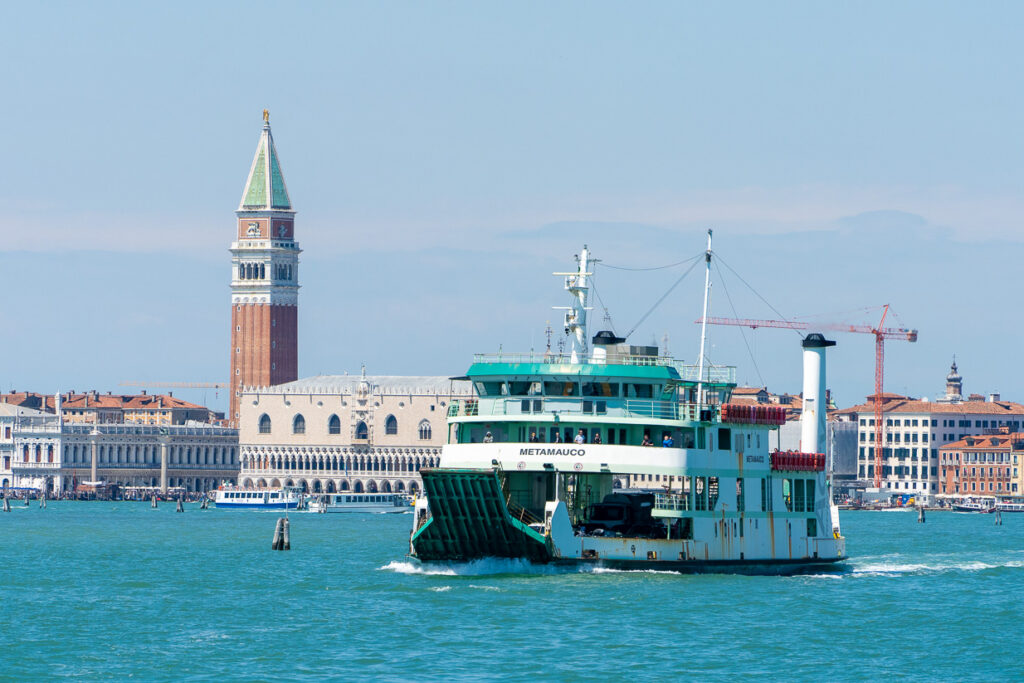
While regular vaporetti carry only passengers and permitted carry-on luggage, ACTV’s car ferries must accommodate significantly heavier loads. To this end, they are equipped with vehicle decks, appropriate access ramps, and special facilities for securing the vehicles. The technical requirements vary depending on the ship.
ACTV publishes information for its ferries, including permissible vehicle weights, axle loads, and vehicle heights. For example, certain ferries can carry vehicles with a total weight of up to 60 metric tons. However, this limit does not apply to all ships.
Modern Propulsion Technology – The Future of the ACTV Fleet
Public water transportation in Venice also faces the challenge of reducing energy consumption and pollutant emissions. Modernizing propulsion technology plays an important role in this effort.
In March 2025, AVM unveiled a retrofitted vaporetto with a hybrid propulsion system. The project combines diesel and electric technology and is designed to test a lower-emission propulsion solution for Venice’s water transport system.
On March 30, 2026, AVM also announced that it had awarded contracts for a total of 19 new hybrid ships:
- 13 vaporetti with diesel-electric hybrid propulsion
- 6 larger Motobattelli for lagoon crossings
Deliveries are scheduled for the period from 2027 to 2029. This is therefore a planned fleet renewal and does not involve 19 ships already in service. In addition to modern propulsion technology, the new ships are expected to offer greater comfort and improved accessibility.
Who runs ACTV? The company's management and its hierarchy
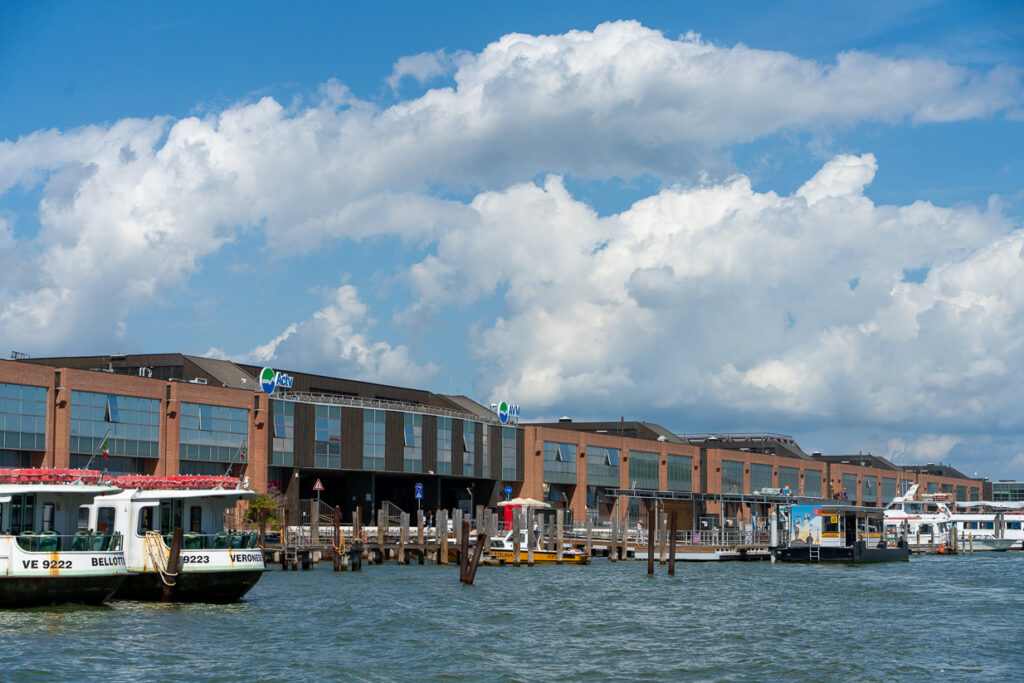
The hierarchy at ACTV is more interesting than one might initially assume. That’s because ACTV doesn’t simply have a single boss who makes all the decisions alone. There is an executive board, a board of directors, and, above them, the parent company AVM. In addition, the government plays an important role.
Who is the head of the ACTV?
Luca Scalabrin – Chairman of the ACTV Board of Directors
Reappointment on July 6, 2026
Luca Scalabrin is the most recently officially documented chair of the ACTV Board of Directors.
The Board of Directors consists of five members. He is responsible for management and major business decisions, but must adhere to the guidelines and approved budget of the parent company, AVM.
The president represents the company externally, including in dealings with government agencies, other companies, and public institutions. One important caveat: Luca Scalabrin’s most recent term, as documented on the ACTV website, began on July 6, 2026, and formally ended on September 30, 2026. The posting was updated on October 19, but does not yet include a clearly confirmed new term of office.
Therefore, I cannot say for certain that he will still be president today, in November 2026.
How long has Luca Scalabrin been president?
The historical development is well documented here:
| Time period | Position |
|---|---|
| June 29, 2023 | Start of his documented presidency |
| Through April 29, 2026 | First documented term in office |
| July 6, 2026 | Reappointment |
| September 30, 2026 | Formal end of the most recently published term of office |
Scalabrin had thus served as president for several terms since June 2023; however, there is no complete evidence of a continuous, uninterrupted tenure.
Who manages day-to-day operations?
Mauro Luigi Valenti – Chief Representative of AVM and ACTV
He has been in office since January 1, 2025. He has assumed the responsibilities previously assigned to the Director General. Mauro Luigi Valenti plays a particularly important role in the company’s day-to-day management. He has broad responsibilities for human resources, finance, administration, and the coordination of the corporate group.
He was appointed by a resolution dated December 16, 2024, effective January 1, 2025. His powers were expanded in October 2025.
Why were these people appointed?
Here, we need to distinguish between two things. In Mauro Valenti’s case, his professional background is clear. He had been with the AVM Group since 2012 and had held various management positions in financial management, controlling, and corporate organization. His appointment was part of a restructuring of the corporate group.
In the case of Luca Scalabrin, the situation is less clear-cut. His formal appointment is documented. However, I have not found any credible public explanation as to why he, in particular, was chosen for the presidency.
It would be truly irresponsible to infer any political or personal motivation from this without evidence.
What does the public ownership structure mean?
ACTV is not your typical private-sector transportation company. Its parent company, AVM, holds a majority stake of approximately 66.5 percent in ACTV. The companies are part of Venice’s public transportation system.
For this reason, managers cannot make decisions completely independently. Investments, corporate goals, and key financial targets must be coordinated with corporate management and the relevant government agencies.
The future of the ACTV will be shaped primarily by four questions:
- How are the ships being modernized?
- How environmentally friendly is public transportation becoming?
- How can ACTV meet the needs of both residents and tourists at the same time?
- And how can all of this be financed in the long term?
In this context, we must distinguish between investments that have already been approved, officially announced projects, and developments that cannot yet be reliably predicted.
The Future of the ACTV – How Is Public Transportation in Venice Evolving?
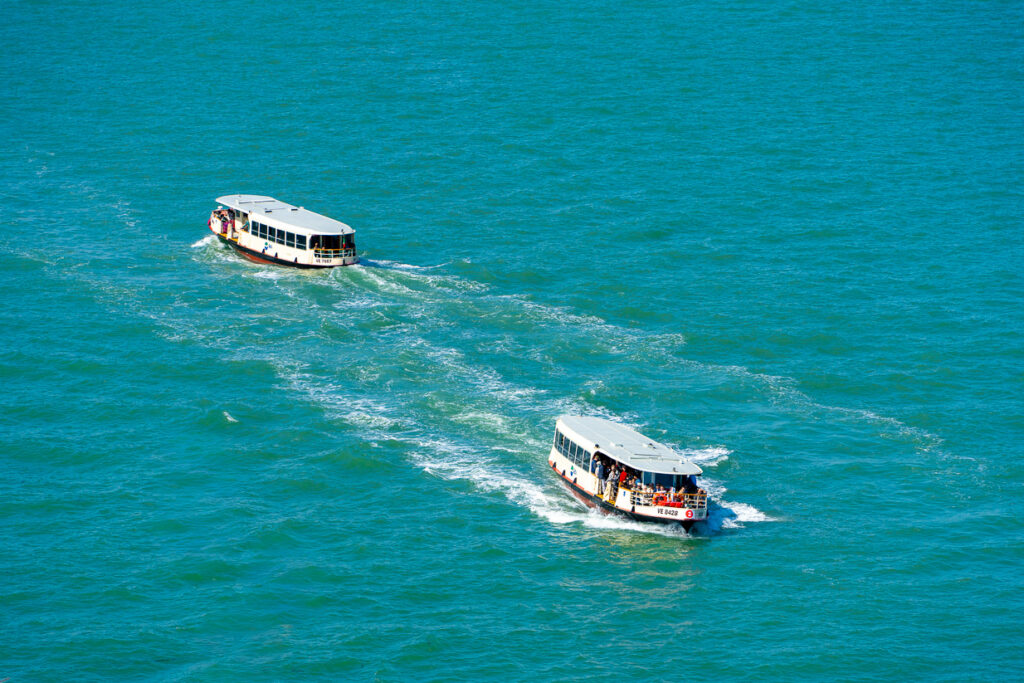
Public transportation in Venice is facing major changes. The city must protect its historic buildings and the fragile lagoon while also ensuring reliable public transportation for residents, commuters, and millions of visitors.
For ACTV, this means modernizing its fleet, reducing energy consumption, and adapting its transportation services to meet future needs. The development of new propulsion technologies, in particular, will play a key role in this effort.
New Ships: 55 Million Euros for Modernization
Officially announced on March 30, 2026: €55 million in investments in 19 new hybrid ships
Deliveries are scheduled for between 2027 and 2029.
ACTV has awarded contracts for 13 new vaporetti and six larger motobattelli. The vessels will be equipped with a diesel-electric hybrid propulsion system. The new vaporetti are to be deployed on the Grand Canal and the Giudecca Canal. The larger vessels are intended primarily for lines 12 and 14.
Each of the new vaporetti is expected to accommodate more than 200 passengers, while the larger Motobattelli will accommodate approximately 400. Features will include air conditioning, modern passenger information systems, and four wheelchair spaces per vessel. The first deliveries are scheduled for 2027.
More Environmentally Friendly Propulsion Technology
A key goal is to reduce fuel consumption and pollutant emissions. To achieve this, ACTV is initially focusing on hybrid technology—that is, a combination of diesel and electric propulsion.
This decision is noteworthy. It shows that the company considers hybrid technology to be a suitable solution for its current operations in the lagoon. However, a decision to completely convert the entire fleet to all-electric propulsion has not yet been made.
New car ferries and modernized docks
The renewal does not apply only to regular vaporetti. According to the City of Venice, the investment program also includes three new large car ferries, the modernization of an existing ferry, and the renewal of other types of vessels.
In addition, there are plans to expand the Santa Maria del Mare ferry terminal on Pellestrina.
Digitalization of Transportation
ACTV is also planning changes to how it organizes public transportation. In 2026, a new operations center for buses, trams, and the People Mover was unveiled. It is intended to help identify service disruptions more quickly, better coordinate vehicles, and provide passengers with timely information.
According to the company, a similar operations center for maritime traffic is in the planning stages. In addition, ACTV is working on further developing electronic tickets and digital customer services.
The Future of Transportation on the Mainland
In addition to its ferry service, ACTV is also modernizing its bus fleet. The company is using both electric buses and hydrogen-powered vehicles as part of this effort. Its goal is to gradually make public transportation on the mainland more environmentally friendly.
According to ACTV, the modernization of the entire vehicle fleet is part of a long-term plan extending through 2030.
The Long-Term Challenge: Residents and Tourists
In addition to the technical changes, ACTV faces a fundamental challenge. Public transportation must remain reliable and affordable for the residents of Venice. At the same time, many tourists use the same modes of transportation.
This creates different needs, particularly on the heavily traveled routes through the Grand Canal and to the islands. While visitors often use the vaporetti for sightseeing, residents need reliable connections for their daily commutes to work, school, or medical facilities.
The future development of the ACTV will therefore not depend solely on new ships. Timetables, transport capacity, funding for the system, and the organization of passenger flows are just as important.
An Overview of the Most Important Future Projects
| Projects | As of November 2026 |
|---|---|
| 13 new hybrid vaporetti | Contract awarded; delivery scheduled for 2029 |
| 6 larger hybrid motorboats | Contract awarded; delivery scheduled for 2027–2029 |
| New Car Ferries | Part of the fleet renewal program |
| Modernization of Existing Ships | Included in the program |
| New Vessel Traffic Control Center | In the planning stages |
| Digitization of Ticket Sales | Ongoing Development |
| Electric and Hydrogen Buses | Phased Implementation |
Particularly interesting
The future of the ACTV is by no means just a matter of new boats. The crucial question is: How can Venice modernize its public transportation system without losing sight of the unique challenges posed by its historic city and its lagoon?
That said, there are also unanswered questions that we should not present as already resolved: How much will emissions actually decrease? Will the new ships noticeably alleviate the capacity problems during peak season? And how will the investments be financed in the long term?
I do not have sufficiently reliable results to make a definitive prediction at this time.
For your website, I would therefore title this section: „The Future of ACTV – As of November 2026.“.
Where is ACTV's headquarters located?
ACTV S.p.A. – Headquarters
Isola Nova del Tronchetto 32
30135 Venice, Italy
Phone: +39 041 2722111
Official corporate headquarters and location of the executive management. It is interesting to note that the parent company, AVM S.p.A., is also located right next door, at number 33.
Parts of the ACTV shipyards are also located on the Tronchetto. Additional technical facilities are located on Pellestrina, and there are bus depots on the mainland.
It is important to make a distinction here: The company's headquarters and management on the Tronchetto are not necessarily the same as the operational control center that coordinates daily shipping traffic.
ACTV by the Numbers – Employees and Passengers
With an average of 2,527 employees in 2025 ACTV is one of Venice's major employers. Among others, the company employs captains, sailors, bus drivers, technicians, workshop staff, and administrative personnel.
Passenger figures also highlight the great importance of public transit. For the year 2022, there were approximately 171.9 million passenger trips recorded on public transportation—including boats, buses, and streetcars. This amounts to an average of approximately 471,000 trips per day.
According to an ACTV report from 2026, approximately 250,000 passengers use public water transportation alone each day.
When you ride a vaporetto in Venice, you’re using one of the city’s most important public transportation systems. For residents, it’s an essential part of daily life; for visitors, it’s a convenient way to explore Venice and the islands of the Venetian Lagoon.
The ACTV Shipyards
On the island of Tronchetto, on the western edge of Venice's historic city center, the company's headquarters are located alongside technical facilities for the maintenance and repair of the ACTV fleet.
This is where ships are inspected, maintained, and repaired as needed. ACTV also operates additional technical facilities on the island of Pellestrina. These facilities are essential for the reliable operation of public water transportation.