Everyone is familiar with the images of the magnificent palazzi along the Grand Canal. But the Giudecca Canal also boasts some particularly interesting sights. You’ll learn about them here through text and photos. Enjoy the panoramic tour on Vaporetto Line 2 and get a sneak peek at what you should focus on.
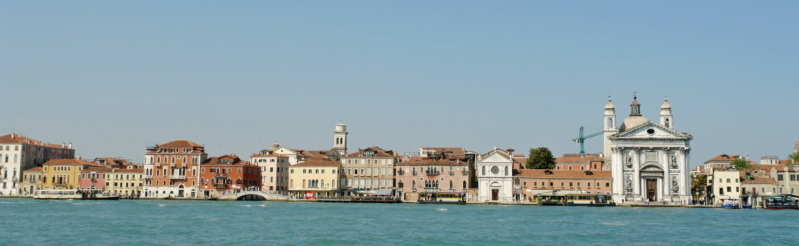
Photo Note: Some palazzi along the Giudecca Canal are in the shade for most of the day and most of the year, making them difficult to photograph. They don’t photograph very well. We did it anyway and edited the photos a bit on the computer afterward. Even so, the quality isn’t comparable to that of a palazzo that’s well-lit by the sun. You’ll notice the difference right away.
Order: The order of the attractions listed in this travel guide is the same as the order of the boat tour on-site, so you can easily flip through the pages or swipe through them one by one on your smartphone.
Map of Attractions Along the Giudecca Canal
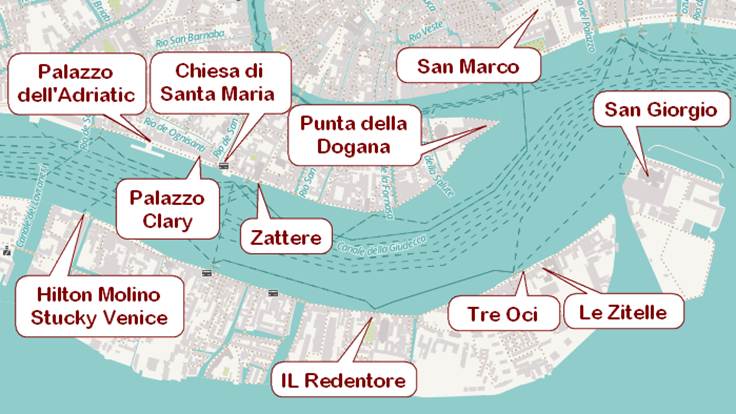
The plan is from http://www.OpenStreetMap.org – © OpenStreetMap contributors
Here on the map, you can see the main attractions along the Giudecca Canal. We didn't include the harbor at the end of the canal (which would be on the far left of the map). Otherwise, the map would be too small, and you wouldn't be able to see as much.
Panorama Tour You can enjoy the sights either by private water taxi or by taking Line 2 between San Marco (San Zaccaria stop) and the harbor.
San Giorgio di Maggiore
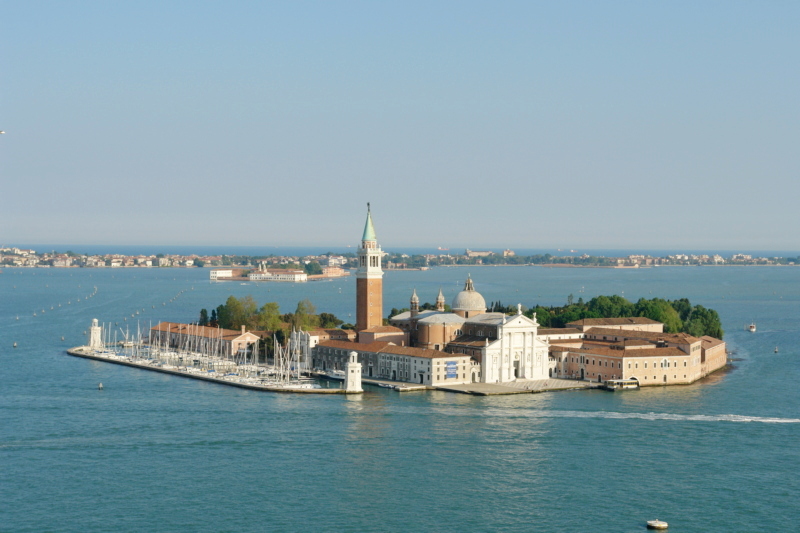
The Church of San Giorgio is located across from St. Mark’s Square and is arguably one of the most photographed sights in Venice. You’ve certainly seen pictures like this many times before. We took this photo from the observation deck of the Campanile. You can clearly see the church’s island setting, with the Lido and the Adriatic Sea in the background.
The Basilica di San Giorgio Maggiore, as it is officially known, is an imposing sight that catches the eye of every tourist in Venice. San Giorgio means „Saint George.“ The church has existed since the year 980 and is a Benedictine monastery.
You can only reach the island of San Giorgio by vaporetto. It’s definitely worth a visit. The Line 2 vaporetto from the S. Zaccaria stop on St. Mark’s Square will take you there in 2 minutes. The island is still part of the San Marco district (sechstel).
Be sure to climb the tower and enjoy the magnificent view of the Venice skyline. You’ll easily recognize the Doge’s Palace, St. Mark’s Square, the Bridge of Sighs, and, of course, the Campanile. On a clear day, you can see the Alps in the distance. From late fall through spring, even the snow-capped mountain peaks are clearly visible.
Punta della Dogana
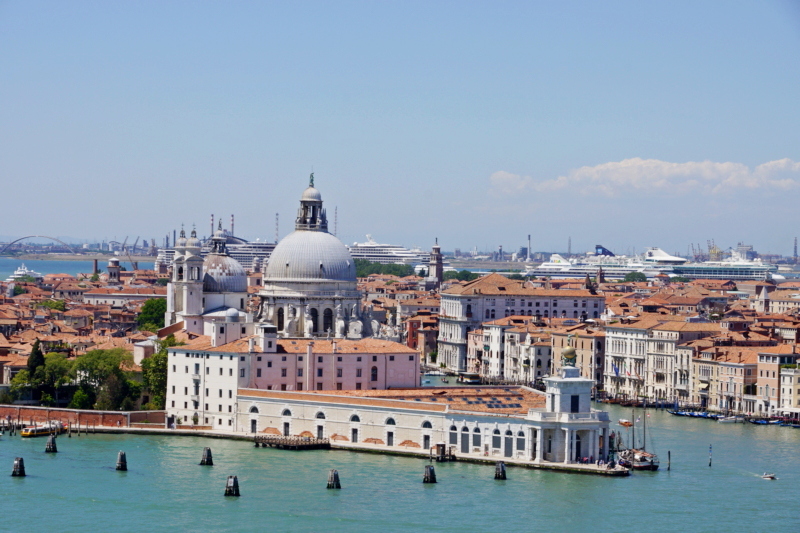
Venice’s old customs house, built in 1677, is now an art museum. Its triangular shape separates the Grand Canal to the north from the Giudecca Canal to the south. At the tip of the triangle stands the Dogana da Mar. In the past, beginning in the 15th century, all goods arriving in the city by sea were cleared through customs, stored, and transferred to smaller ships here, so that they could be transported through the narrow canals to all parts of the city.
Notice the two slaves at the very top of the building holding a golden sphere. On top of the sphere, Fortuna, the weather vane, turns in the wind. Today, the Punta della Dogana is a museum of contemporary art in Venice. The artworks of the François Pinault Foundation are exhibited here. It is one of the largest collections of contemporary art in the world.
Le Zitelle
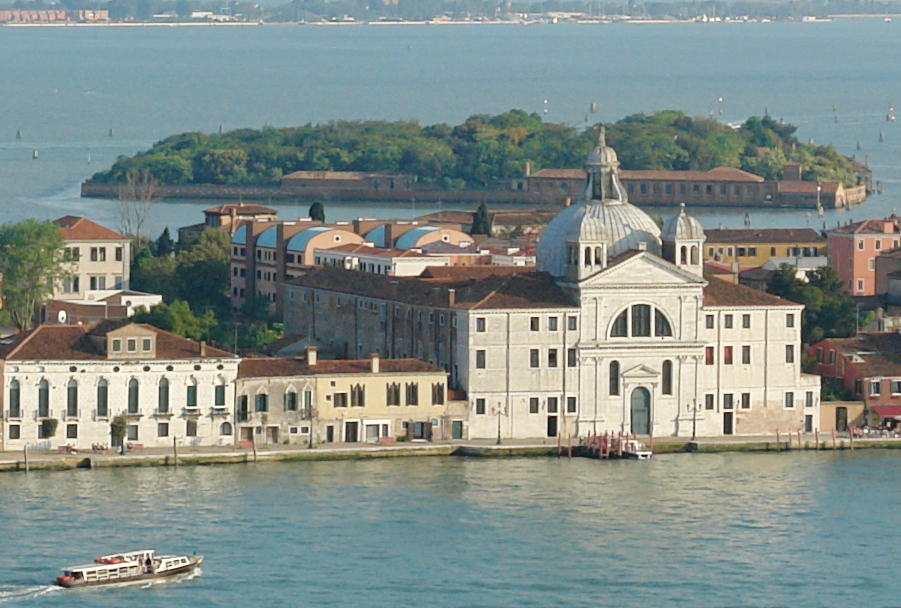
The Chiesa delle Zitelle used to house a convent where about 200 unmarried women or young girls (in Italian, “zitelle“ means unmarried women) made lace. The church was built around 1586. It is usually closed, but during the summer months (May through October), a Mass is held there on Sundays. Today, the wings of the convent house a luxury hotel. The Hotel Bauer acquired the former convent and converted it into a 50-room luxury hotel called the “Palladio Hotel & Spa.”.
Tre Oci (Three Eyes)
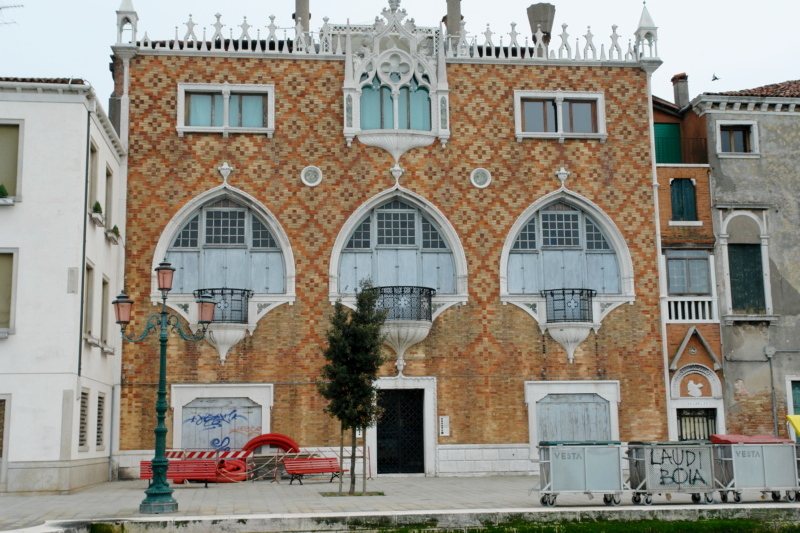
The Neo-Gothic house was designed and built in 1913 by the artist de Maria. The three windows on the facade represent the three members of the de Maria family: Mario, his wife, and their son, Astolfo Emilia Voight. Inside, the original furniture and many artistic and photographic materials documenting de Maria’s life and the house are still preserved.
Today it is a photography museum. Check in advance to find out when and which photography exhibitions are taking place here. Website: http://www.treoci.org/index.php/it/
Hours: Daily 10:00 a.m. – 6:00 p.m. Closed on Tuesdays
The 3-Eyed House is located next to the Le Zitelle Church
Il Redentore
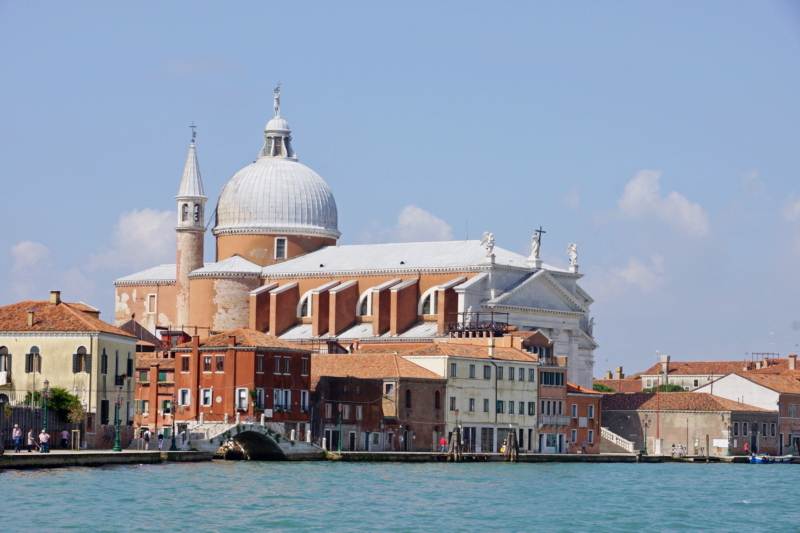
In 1576, the Venetian Senate vowed to build a new church if Venice were spared from the plague. And indeed, the plague disappeared from the city, and the church was built. Upon its completion in 1592, the church was consecrated.
In gratitude for the end of the plague, the Redentore Festival has been celebrated every year since then. In 1577, a bridge to the island of Giudecca was built for the first time. This tradition is observed AGAIN today. Today, however, the Italian Navy’s engineers build a pontoon bridge. The bridge leads directly to the entrance of the Church of Il Redentore. The faithful walk across it into the church, where the Patriarch of Venice blesses the city each year.
The festival comes to a close at exactly midnight on Saturday night into Sunday morning and is celebrated with a very, very large fireworks display. The annual Redentore Festival is one of the festivals celebrated on a grand scale by the people of Venice.
At the Zattere: Santa Maria del Rosario
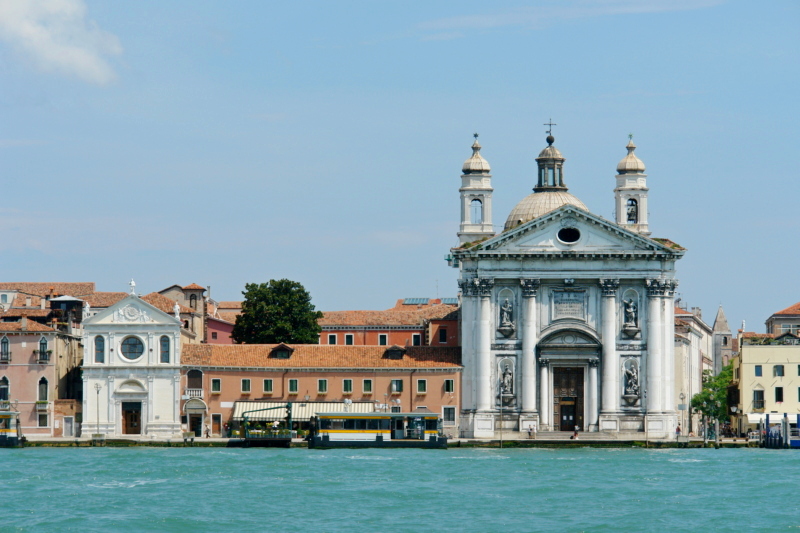
On the left side of the picture is the smaller church of Santa Maria della Visitazione (also known as Artigianelli or San Gerolamo dei Gesuati). It is the predecessor of the church of Santa Maria del Rosario, which you can see on the right side of the picture. The small church is now a library. The large church is located right next to the Zattere stop. It is commonly called „I Gesuati.“.
Zattere: The name "Zattere" comes from the rafts that used to be moored at this pier.
Here are also a few restaurants in particularly scenic locations where you can enjoy a beautiful view of the southern Giudecca Canal during your stay.
Palazzo Clary
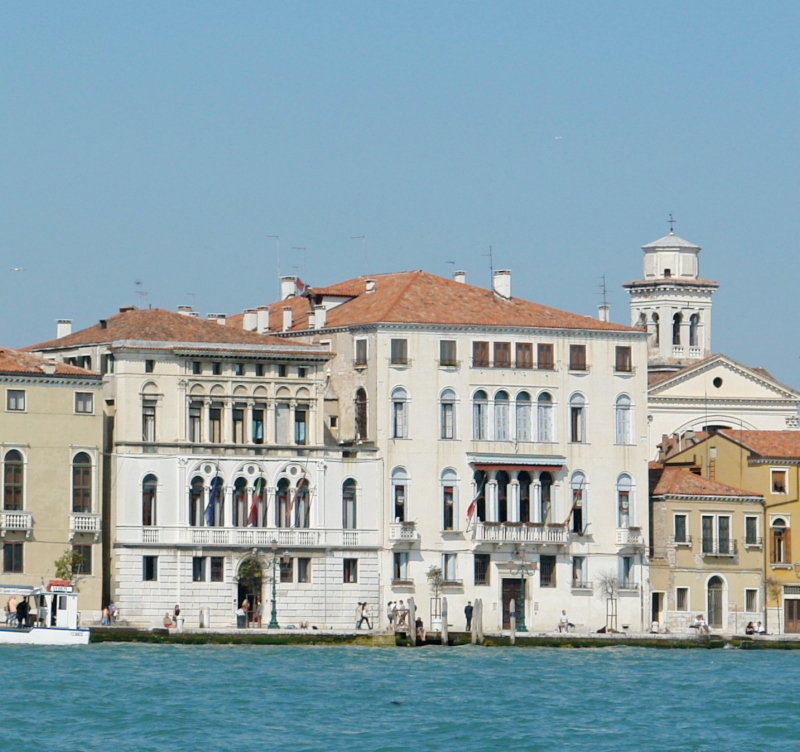
The Palazzo Clary is on the right side of the picture. It is a late-Renaissance palace and was built in the 17th century. It takes its name from its owner: Prince Clary-Aldringen. This palace is often described as the most magnificent palace on the Zattere.
After World War II, the French Consulate General was temporarily located here. Note the four stories. The ground floor features the entrance and two coats of arms; the first and second floors are in the typical Neo-Renaissance style, with eight lancet windows, balconies, and state rooms; and the third floor is quite simple, with nearly square windows that are otherwise undecorated.
Palazzo dell’Adriatica di Navigazione
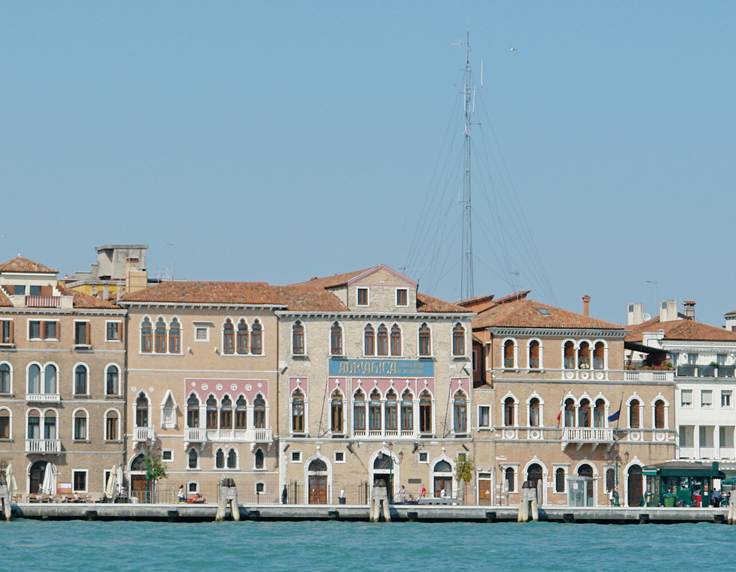
A former shipping company founded in 1932 that transported cargo and passengers between Venice and the countries bordering the Adriatic Sea.
Hilton Molino Stucky Venice
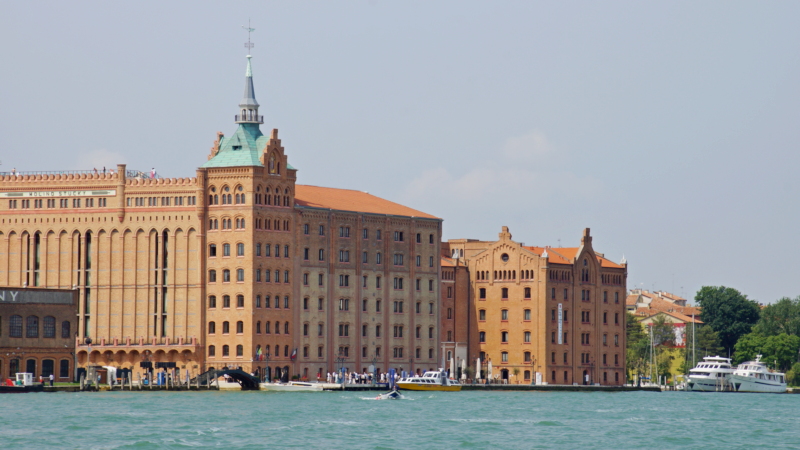
Today’s „Hilton Molino Stucky Venice“ hotel is located at the very western end of the Giudecca Canal and was originally a grain mill. It is Venice’s most significant industrial monument. Giovanni Stucky, the son of a Swiss father and a Venetian mother, commissioned its construction at the end of the 19th century. Its brick architecture is somewhat reminiscent of the port city of Hamburg. Even during World War II, it was the largest mill in all of Italy. In the mill’s heyday, 1,500 workers toiled here around the clock. Production ceased in 1955.
It was originally supposed to be converted into apartments, a hotel, and a convention center, but a major fire in 2003 prevented this from happening. The 380-room Molino Stucky Hilton Hotel, featuring a convention center that can accommodate 1,500 people, opened on June 1, 2007.
The Cruise Ship Port
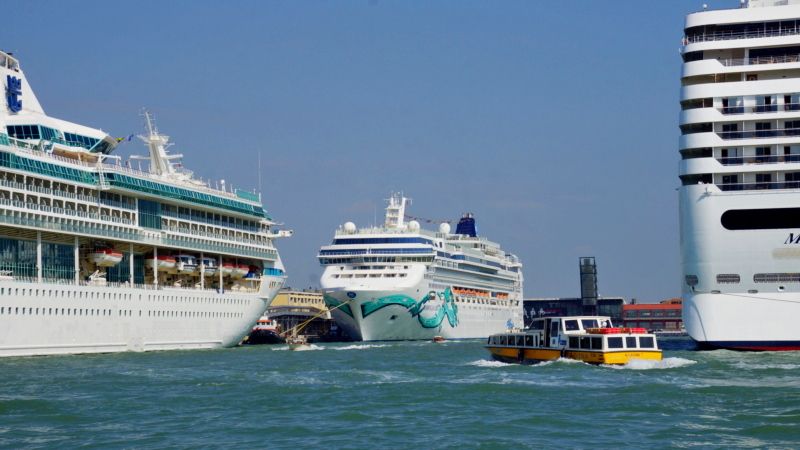
During the summer season, from March through November, several cruise ships are anchored in Venice, mainly on weekends. In addition, large ferries operate year-round to Southern Europe (Greece, Turkey, etc.).
These cruise ships cause NO damage to Venice. Well out in the open waters off the city, the ship's engines—with their large propellers—are shut off, and the ships are gently towed at walking pace through Venice, past St. Mark's Square, and into the harbor by small pilot boats.
Read our guide, „Valuable Tips and Tricks,“ to find out when they arrive and depart, and enjoy the spectacle as these giants of the sea pass right by you.
On the Grand Panorama Tour, you’ll pass right by the harbor. This is the northern turning point of the tour. From here, the route takes you past the Tronchetto parking garage and back across the Grand Canal to the starting point of the tour.