The debate over cruise ships in the Venice Lagoon is entering a new phase. Starting in the year 2027 The port entrance is being reorganized for certain classes of ships. While the very large ocean liners will continue to be excluded, there are signs of a return to terminals closer to the city for luxury and expedition cruises.
New Limits for the Lagoon
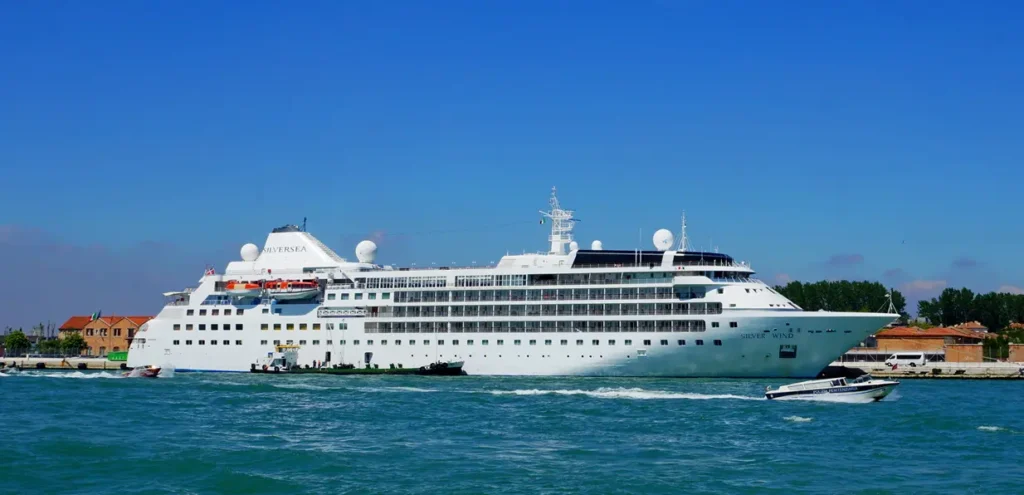
According to the Port Authority, the strict ban on the approach of the Stazione Marittima modified starting in 2027. Vessels that do not exceed certain dimensions will then be allowed to sail deeper into the lagoon again. The key points of the new regulation are:
- Maximum length: 250 meters
- Maximum size: 60,000 gross registered tonnage (GRT)
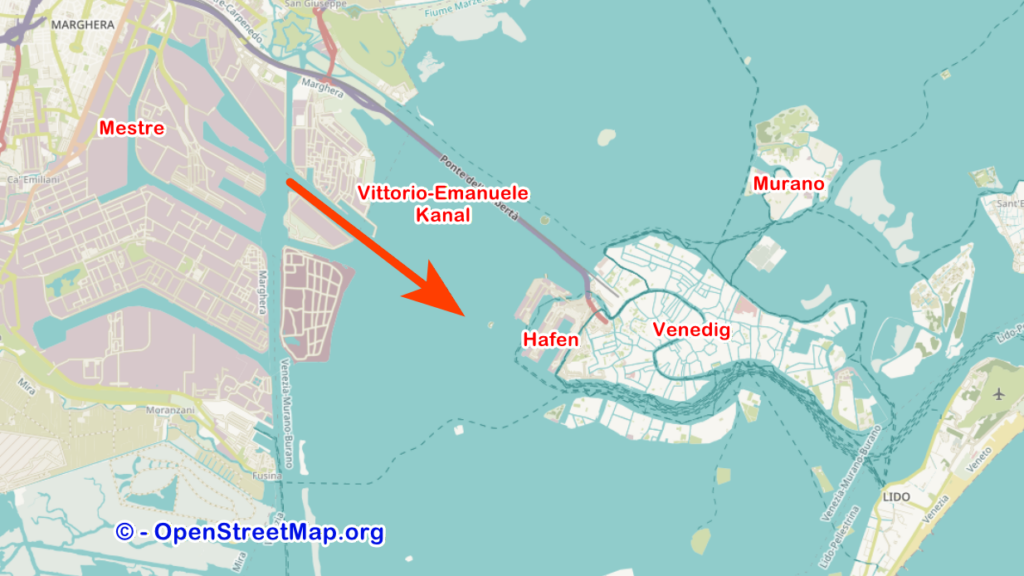
- The route: The boats no longer take the route that passes directly by St. Mark's Square (the Giudecca Canal), but instead reach the harbor via the Vittorio Emanuele III Canal.
This means that high-end luxury liners and expedition ships (such as those operated by Hapag Lloyd, Phoenix Reisen, or Oceania Cruises) can once again dock directly in Venice. Large cruise ships operated by companies such as AIDA, MSC, or Costa remain excluded from this relaxation due to their size and must use alternative ports such as Marghera, Trieste, or Ravenna.
„The “Shift Change': Why Crusaders Are Often Unfairly Criticized"
It is often claimed that cruise ships are the main cause of mass tourism. However, our experience from 25 years of arranging water taxis and providing on-site logistics paints a different picture.
For cruise passengers, Venice is not just an ordinary stopover for a quick shore excursion. It is a main port of entry and departure.
- The Infrastructure: With Italy's third-largest airport, the main train station, and large parking garages, Venice is a logistical hub for passenger transfers.
- Value Creation Instead of Day Trips: A large number of passengers arrive days before the cruise or stay in the city after the trip. They book hotels, hire local guides, and dine at restaurants. They are therefore an economically stable factor in sustaining the city and differ significantly from „day tourists,“ who leave the city after just a few hours.
The Numbers in Perspective
If you look at the raw numbers, the proportionality becomes clear: Of the approximately 20 million visitors Do they do that? 800,000 cruise passengers merely 4 % ... Even if every single one of them were to visit the city, they would account for only a fraction of the tourist traffic.
The 2017 Referendum: A Critical Analysis
The media frequently cite a 2017 referendum in which „the majority of Venezuelans“ allegedly opposed the ships. From a technical standpoint, however, this statement is incomplete:
- Venice, together with the mainland, has a population of approximately. 250,000 residents.
- However, only about 18,000 people part.
- That amounts to a stake of just 7,2 % the population.
Although the participants voted almost unanimously against the ships, with a turnout of 7.2 %, it is hardly possible to speak of a vote by the „majority of residents.“ Furthermore, it is unclear how many day-trippers also voted in this informal street survey.
Conclusion for Travelers
The plan for 2027 and beyond represents a compromise between preserving Venice’s historic architecture and maintaining the city’s status as a major port. For vacationers who value quality and a longer stay in the city, cruises departing from Venice remain a logistically sensible and valuable form of travel for the city.