In principle, ACTV operates only five types of vaporetto:
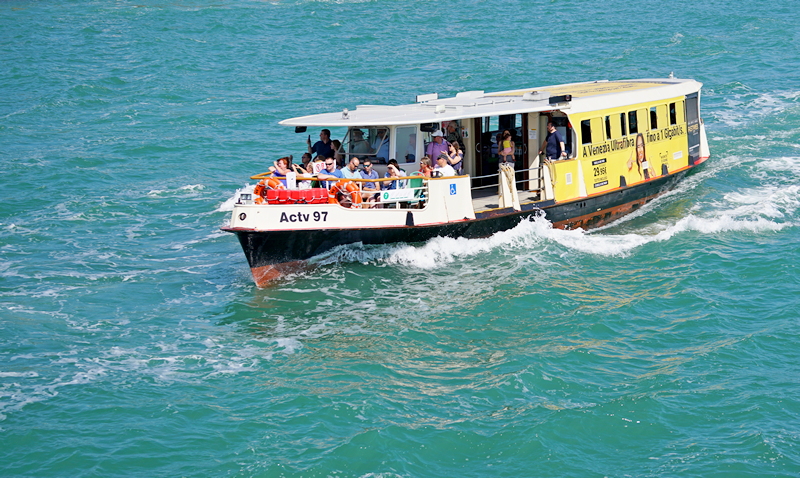
This is the type of boat you'll use most often. It crosses Venice along the Grand Canal every 12 minutes and is, so to speak, the fleet's workhorse. It is primarily used on Lines 1 and 2.
This guy will drive you to Murano
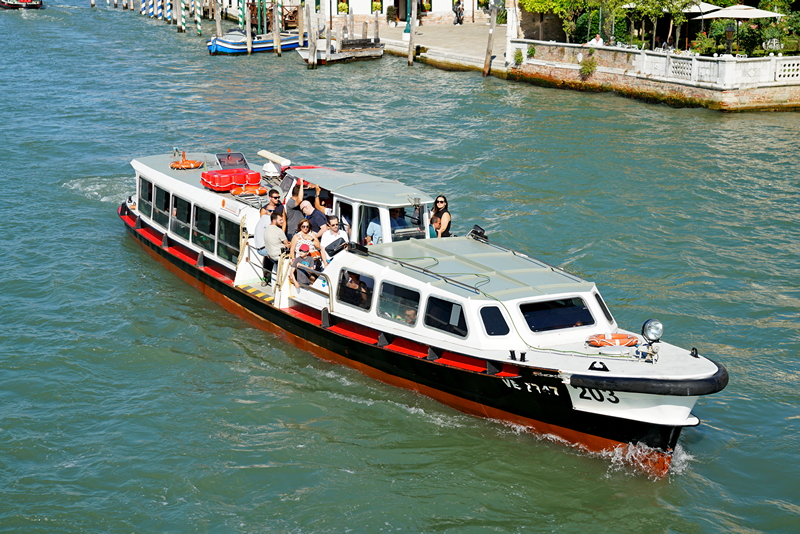
Not all vaporettos are suitable for navigating the narrow canals of Venice or Murano. Furthermore, the largest type of boat isn’t always needed on the secondary routes. This black-and-white vaporetto is used for transfers to and from Murano. It’s slightly smaller (narrower) than the boats on Line 1 and Line 2, making it a perfect fit for Murano’s narrow canals.
The large boats traveling to and from Punta Sabbioni
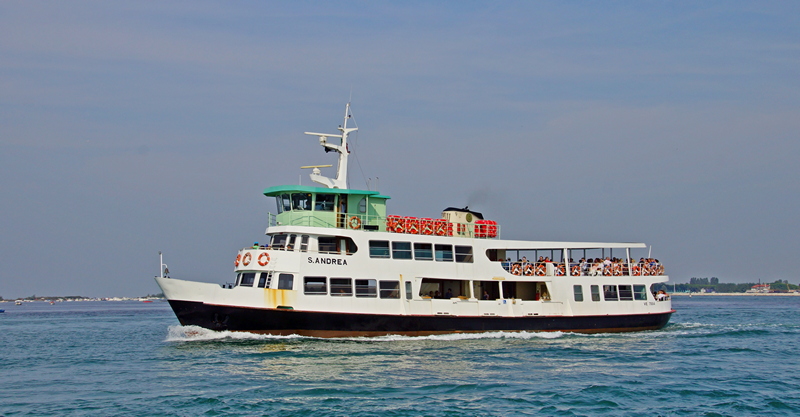
The boats that travel from Punta Sabbioni to Venice and back carry a particularly high number of passengers.
For one thing, thousands of passengers who live on the peninsula between Punta Sabbioni and Cavallino and commute to work in Venice use this route.
And then, of course, there’s the large number of vacationers who spend their summer vacations on the Adriatic Coast and want to take a few hours to visit Venice from Punta Sabbioni.
This type of boat can carry 1,200 passengers. Bicycles are also allowed on board, but only between Punta Sabbioni and the Lido. In Venice itself, there is a very strict ban on bicycles. The sun deck on the first floor is, of course, particularly popular.
Type II Vaporetto in Service at Punta Sabbioni
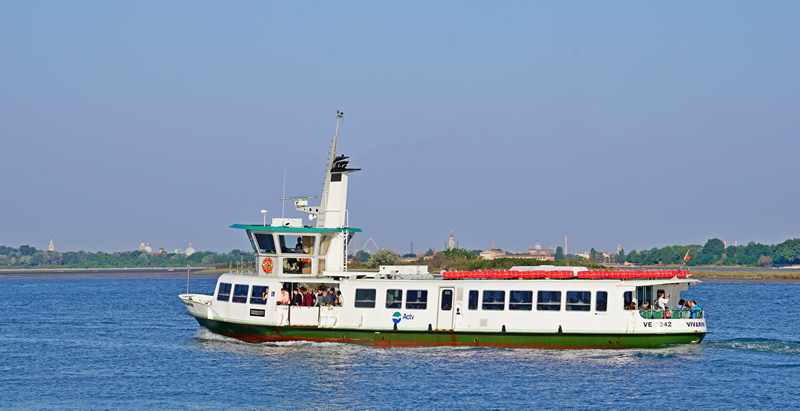
The photo shows the second type of boat that shuttles back and forth between Punta Sabbioni and Venice. It can carry only 400 passengers and is used during times when passenger volume isn’t quite as high—primarily early in the morning, late in the afternoon, and in the evening. Bicycles are also allowed on this boat. This service also operates only between Punta Sabbioni and the Lido.
The Car Ferry to the Lido
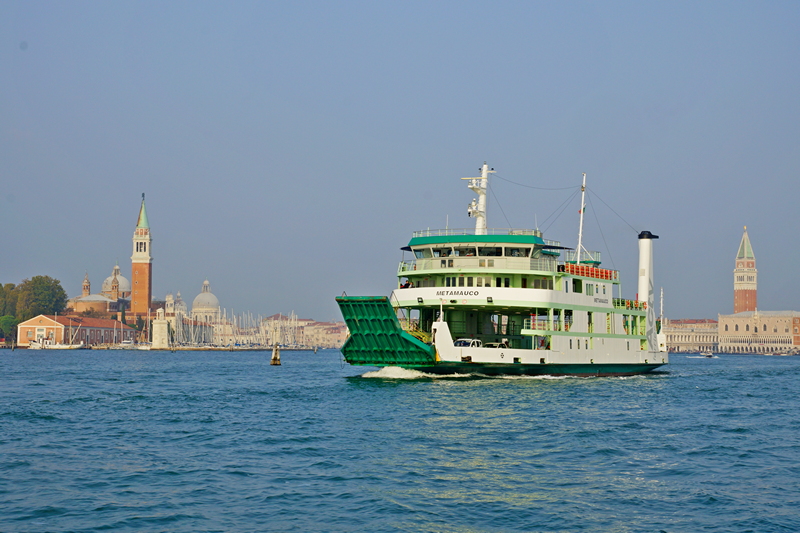
On the Lido, there is „normal car traffic.” Cars, buses, vans, trucks, etc. This applies both to locals who live here and to vacationers who have booked accommodations on the Lido. The ferry transports all types of vehicles coming from the mainland from the Tronchetto parking island to the Lido and back again.
How It All Began
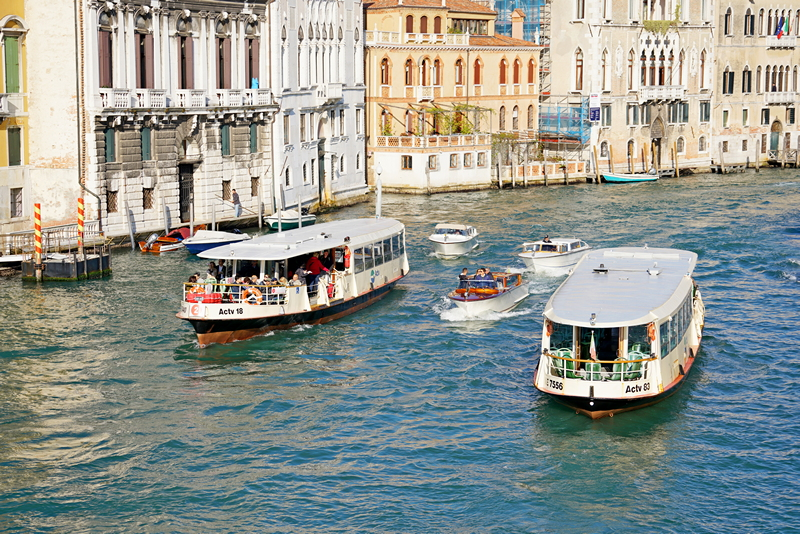
Pictured: Two vaporettos on the Grand Canal.
For centuries, Venetians got around almost exclusively by rowboat or gondola. There were only a few larger sailing or rowing ferries (traghetto) capable of transporting people and goods across the Grand Canal. Without these boats, modern life would be unimaginable, both for locals and for tourists.
Around 1880, the first steam-powered passenger boats appeared in Venice. These boats followed fixed routes along the Grand Canal and to the islands of Murano and the Lido.
Vapore = Steam, -etto is a diminutive form.
The word „vaporetto“ therefore means “little steamboat,” “tiny steamboat,” or “minuscule steamboat.”.
Of course, all vaporettos today are powered by diesel engines. They operate on a fixed schedule and cover a dense network in, through, and around Venice. Naturally, they also serve the islands of Lido, Murano, Burano, and Torcello. The operator is the ACTV (Venetian Transportation Consortium).
The exact schedules with departure times for all lines:
Line 1 – Line 2 – Line 3 – Line 4 – Line 5 – Line 6 – Line 7 – Line 8 – Line 9 – Line 10 – Line 11 – Line 12 – Line 13 – Line 14 – Line 15 – Line 16 – Line 17 – Line 18 – Line 20 – Line 22 – Night Line N – Night Line NLN – NMU Night Line
Overview of All Vaporetto Lines
Vaporetto Lines 1 through 5 – Vaporetto Lines 6 through 10 – Vaporetto Lines 11 through 15 – Vaporetto Lines 16 through 22 – The Vaporetto Night Lines
Major Vaporetto Destinations in Venice – The following Vaporetto lines stop here:
St. Mark's Square – Piazzale Roma – Train Station (Ferrovia) – Tronchetto Park Island – Rialto Bridge – Lido – Murano – Burano – Punta Sabbioni